at Senshin Obon in LA this year a very special lantern
IT IS OK a poem by Yuri Kageyama
it is OK
to idealize
he is now
an angel
or
at least that’s
what they say
he never laid eyes on another
he always brought home the pay check
he never broke anything
and he never snored
it is OK to believe
all those things
and think he was, will be
perfect
This piece came about as part of the Poetry Challenge, a group in Tokyo that shares work on a given theme. The theme was “Dreamtime.” I’m sharing it here because it turned out nicely, if I may say so, with the title “It Is OK.”
Below are two versions of the poem as songs: What our son Isaku did with the poem using AI, and the other by Isaku’s Berklee friends, Tea and Hiroshi Tokieda, in a human version. I know the man whom I loved all my life will be proud of this poem _ and the music.
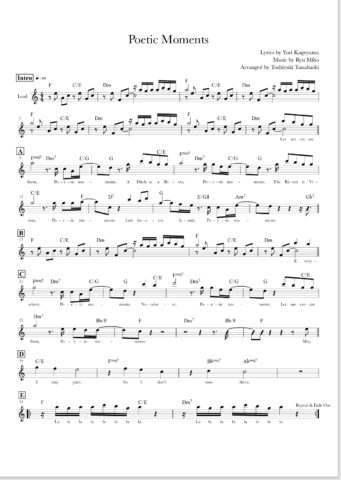
“Poetic Moments,” a poem I wrote that was part of my poetic series from a few years ago called “The River,” is now a song. The music is by Ryu Miho, singing in this version. Toshiyuki Turner Tanahashi did the background music and arrangement. Believe it or not, I am going to try to learn how to sing it.
Here are the words:
POETIC MOMENTS by Yuri Kageyama
Let me create them Poetic moments A Ditch is a River Poetic moments The River is Vision Poetic moments Lost forever found Poetic moments Everywhere Poetic moments Nowhere Poetic moments Let me create them Poetic moments May I stay pure So I don’t miss them.
I’m trying to express how fleeting are those special moments in life _ those moments of sheer beauty or recognition, coming to an idea or feeling love with certainty, and knowing this will all come to an end. Those moments are special. But only those who deserve them get to experience them. That is what I believe. Being a poet is not a skill, gift or even an inspiration. It is about the kind of life you lead so that you become that kind of person who can be a true poet.
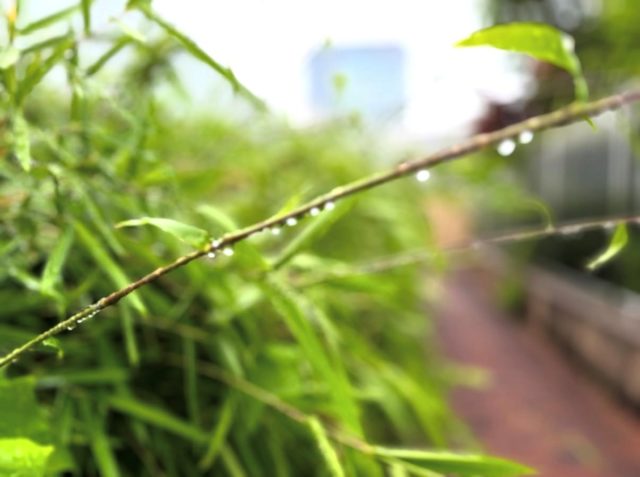
Photo taken in June 2026 by the Sumida River in Tokyo.
What are movies for you?Why do you keep making movies?
This is before I joined The AP, but I had an opportunity as a young reporter to ask an aging Akira Kurosawa a question: Why do you keep making movies?
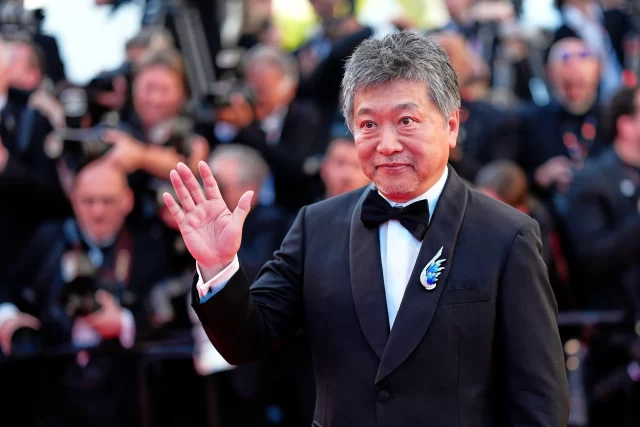
I got to tell that exact story in my recent AP story when I interviewed Hirokazu Kore-eda. Kore-eda of course asked: What was Kurosawa’s answer? I pretended to be surprised: 監督それききます?! You would ask; wouldn’t you? Kore-eda said: Come on, the way we are talking now このながれでは that’s the inevitable question. So I told him how Kurosawa had replied with a childlike but faraway look on his face, as though he was talking to no one in particular, maybe himself: If you take movies away from me, I am left with nothing. 僕から映画をとったらなにものこらないから。And Kore-eda instantly remarked: すばらしい!before he gave his answer about how lucky he was that he has his beloved hobby for a job. That interaction and his answer close my AP story.
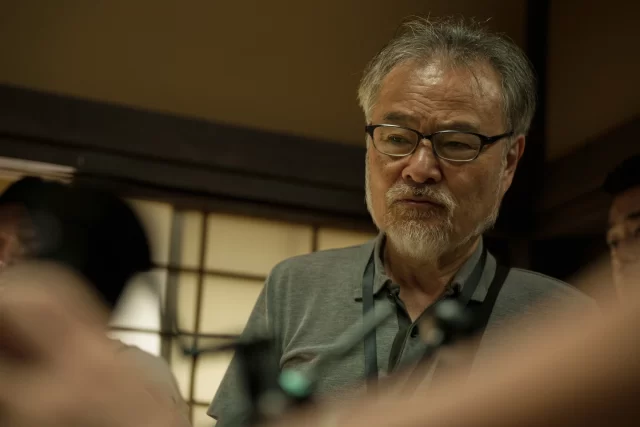
I asked the same question to Kiyoshi Kurosawa, too. And the funny thing was that he didn’t ask what Akira Kurosawa’s answer was _ the entire opposite of Kore-eda’s reaction. He gave his own answer, which is the top part of the story, about how movies are an eternal mystery, and that’s why he keeps making them. Then I asked him: Aren’t you going to ask what Akira Kurosawa said? And then Kiyoshi Kurosawa said: Well, can I ask? Is it OK? So I said: Of course, I was more surprised you didn’t ask. Which goes to show what a nice person he is. When I told him what Akira Kurosawa had said, he said: うまいこというな。Which translates to: Hey, what a clever answer. It’s telling how his answer was a bit different from how Kore-eda had said すばらしい which just means “Fantastic!”
I’m going to keep asking this same question every time I get to interview a great Japanese auteur. BTW Kiyoshi Kurosawa said he had fun being interviewed. たのしかった he said. I’ve lived life and played reporter long enough I get to have fun now and then. Coincidentally an online “memory” popped up about the Akira Kurosawa Question. That said I’d asked: Why do you keep making movies? 監督はなぜ映画をとり続けるのですか? rather than What are movies for you? It’s asking the same question, but maybe in a better way for the stage he was in _ both his life and career as a director. So next time I interview a legendary Japanese director, I would have to ask both questions.
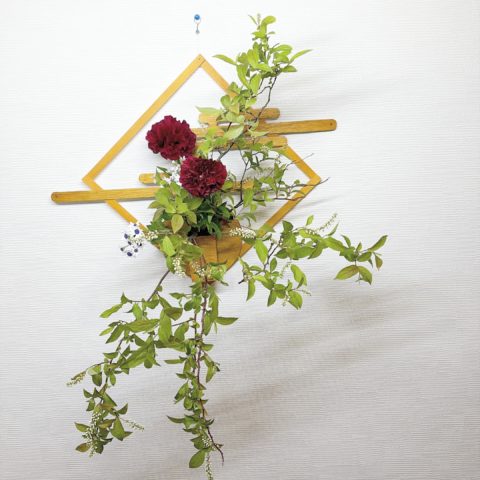
My teacher made this vase himself. The point of this ikebana is to have the elements cascade downward, and protrude forward, creating a flow of life in the leaves, stems and flowers that’s a statement, from top right to left downward, in a softly swinging angle.
Below is another, perhaps better, shot of the Ikebana, created May 13, 2026. And the link to My Ikenobo Ikebana No. 12 with a link to previous Ikebana that has more such links, all the way to My Ikenobo Ikebana No. 1 May 21, 2025. And so it’s been just about a year now.
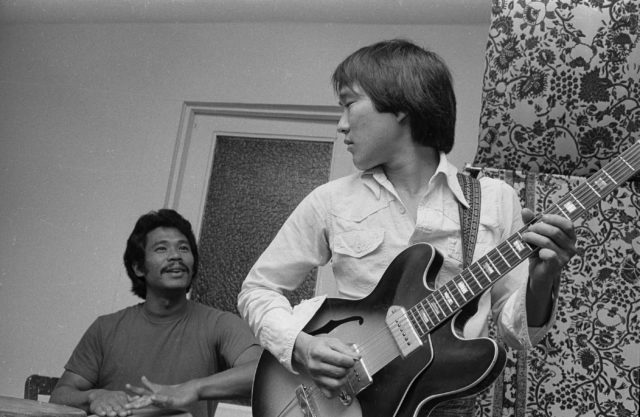
Gordy with Duke in San Francisco 1979. Photo by Bob Hsiang.
I now know it’s all the same thing, love and music. Or the poem, flower arrangement or any other pursuit. It’s about connecting with all that went before you, in all their trials and tribulations, everything. And love is a part of that, your connecting with that person you love. Maybe your friend, your mother, your partner for life. It might get complicated if you are trying to connect with the past, while at the same time trying to connect with that individual, who in turn may also be connecting with the musical or theatrical greats who went before him or her. But, hey, it’s all the same thing. It is how you live and how you choose to connect. And it is definitely a lifelong effort. Worth every second. Filling you with joy and meaning about having known those special connections, and that special person. So do not mourn. Just rejoice. Keep playing, writing, creating and loving.
The poem as sung by Miho Ryu with music arranged and performed by Toshiyuki Turner Tanahashi.
Love Simply
To be near hurts
To be far hurts, too
Love simply hurts
To live hurts
To die hurts
Love simply hurts
Watching you die
Hurts even more
Love simply hurts
To know you hurts
To have known you hurts
Love simply hurts
But to not know you,
Not hurt for you
Is simply not a choice
Love simply hurts
Love simply hurts
Love simply hurts
「愛はただ痛い」
a poem by Yuri Kageyama translated into Japanese by Ryu Miho
近くにいるのもまた辛い
遠くにいるのもまた辛い
愛はただ痛い
生きるのもまた辛い
死ぬのもまた辛い
愛はただ痛い
あなたが死ぬのを見るのは
もっと辛い
愛はただ痛い
あなたを知るのもまた辛い
あなたを知っていたのもまた辛い
愛はただ痛い
でも、あなたを知らないのは
あなたのために傷つかないのは
ただ選択できない
愛はただ痛い
愛はただ痛い
愛はただ痛い
A rendition by Teru Kawabata with his singing and guitar. August 2025.
This poem, now lyrics to a song, was written in 2023. It is still developing, but I feel it has come full circle. It still makes me cry. My love is still so very real and, I know, eternal, which means the pain will never go away. It is overwhelming and frightening. But I now know many people feel this way. It is a feeling that comes only with someone you truly love. The wonderful thing is that I was able to show him my poem. He just said, “I feel loved.” The look he had on his face was like a child, totally fulfilled and happy. And what else is a poem meant to do?
I read “Love Simply” with music by Jackson on drums and Teru singing and playing guitar of the music he wrote at an open-mic in Tokyo Oct. 5, 2025. Thanks for having us and being such a fun crowd.
I read my poem “Love Simply” with Teruyuki Kawabata on guitar and Osaki Haniya, fellow poet and co-writer of “Continuously Poetry,” at Bar Gari Gari in Ikenoue, Tokyo, Sept. 19, 2025. Thanks to the Drunk Poets for having us.
Besides the Book Party, I also earlier read “Love Simply” with Teru at Infinity Books, on Oct. 11, 2025. Before I read, I told the people at the jam session that the poem was about my partner of more than 40 years, who died in April. I don’t think I ever said that in public about my poem. I also told them that I showed him the poem before he died, and he told me he felt loved. You know how you feel a bit drained, depressed even, after reading your work. But one young man who was there to jam told me he liked my poem, then said: “Your husband is one helluva lucky man.” That made it all worth it. And I thanked him.
Actually my teacher told me it’s against the rules to let a flower that broke off float in the water, when I did it. But when he took the photos at the end of the class with all the lighting set up, or actually another student and me holding them up, he took the flower, dropped it in the water and took this photo. He is a nice teacher. Although allowed in other styles of Ikebana, Ikenobo did not, seeing fallen flowers as death, and his works are about life, purity and our eternal connection to the spiritual. It made me sad that death is so beautiful. And I like this photo.