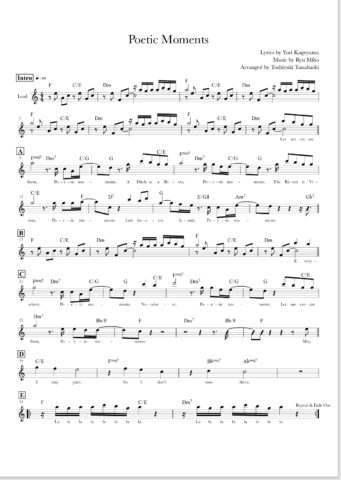
A song about love with Words written by Yuri Kageyama and Music and song by Ryu Miho
what do you think?
it’s a trick question
what do you think?
with a right answer
what do you think?
not at all open-ended
what do you think?
as it might seem
what do you think?
it’s asking do you really love me?
do you truly understand?
what do you think?
the answer isn’t fixed
just a right answer, and a wrong
what do you think?
i love you so much
what do you think?
and long after we’re all gone
what do you think?
that big question is still there
what do you think?
what do you think?
Lovers are always asking each other: “What do you think?” and getting upset if their lover doesn’t quite get it, or answers he or she felt something about an artwork or a film they just saw together in a different way from what you’re feeling, or thought the feeling should be, or whatever. It’s really a fruitless game, but it’s one all lovers play, all the time, throughout history, wherever they are, any nation, any culture. Because ultimately you’re just asking: Do you love me? And there is no right answer or a wrong one. Just that moment you share, you are both here, alive but together on this little beautiful planet, lost in the cosmos, and we never know what to think anyway.
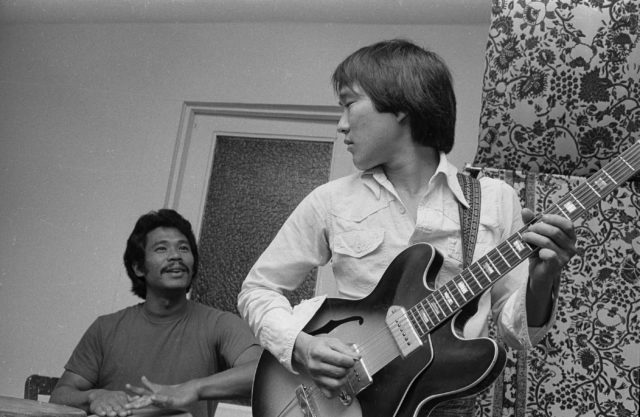
And this version as arranged and performed by Toshiyuki Turner Tanahashi.
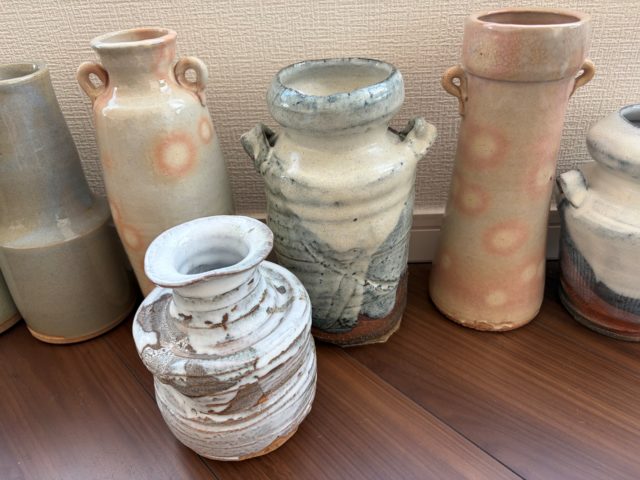
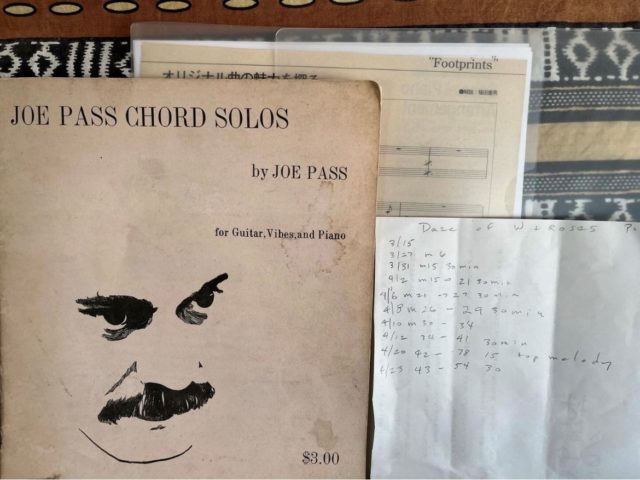
People say things have little meaning, and it’s just the person or the emotions that the thing reminds you of that have meaning. Sometimes they are one and the same thing because if you have something for more than 40 years, that certainly means something, and that thing has a meaning of its own. People leave, taking off from this world and going somewhere very far. But the thing stays. And it continues to tell us what that person means. Because that person never really leaves. He is always here, just like, or even more than, that thing. This is the fourth in a series that follows this third piece, which has a link that connects to the previous pieces.
Actually my teacher told me it’s against the rules to let a flower that broke off float in the water, when I did it. But when he took the photos at the end of the class with all the lighting set up, or actually another student and me holding them up, he took the flower, dropped it in the water and took this photo. He is a nice teacher. Although allowed in other styles of Ikebana, Ikenobo did not, seeing fallen flowers as death, and his works are about life, purity and our eternal connection to the spiritual. It made me sad that death is so beautiful. And I like this photo.
The ambulances are screaming. We look up and see a big tear in a steel fame right by our apartment building. We wonder but figure it’s not a murder because we don’t read about it, and there aren’t that many murders in Tokyo. Every time we see the broken frame, we wonder who it could have been. And what might have driven this individual, whom we don’t know and never will know, male or female, young or old, happy or unhappy, probably unhappy, literally over the ledge to a dark deep definitive leap of death. It does not make us feel very good. Every time we see that broken frame. A few weeks later, the frame gets fixed. And we stop wondering.