Counting the Days Until Christmas

Just sharing photos of Our Tree 2024. No special reason. Just joy, love, gratitude and memories being forever.


Two Days Until Christmas

One More Day. It’s Christmas Eve.

Merry Christmas!
And More from Our Tree.


Counting the Days Until Christmas
Just sharing photos of Our Tree 2024. No special reason. Just joy, love, gratitude and memories being forever.
Two Days Until Christmas
One More Day. It’s Christmas Eve.
Merry Christmas!
And More from Our Tree.

My translation of Tanikawa’s final poem
I wake up
I see the foliage in my yard
I remember yesterday
I’m still alive
Today just needs to be more of yesterday
That’s how I think
I have no plans to do a thing
Nothing hurts
I’m not itchy either but I’m grateful
To whom in the world?
To God?
To the world? To outer space?
I don’t know but
A sense of gratitude stays

Our journey continues. Clich here for the first part of our journey. Below is where we pick up, from May through July 2024. The odd number installments are by Osaki Haniya and the even numbers are by yours truly. The theme is supposed to be “love,” although, as always, we go all over the place.
RENSHI
A poetic collaboration Part Two
By Osaki Haniya and Yuri Kageyama
連詩 第2弾
1
あなたと交わるのは
薄く大気が身動きする砂塵のあわい
雨と風と時が
廃墟の親和性を完成してくれる
そうだったね
徐々に思い出していくよ
倦んだ傷口と解剖メスの
刹那の痛み
白灰色の泥絵の具に
厚塗りの膠を重ねて
2
Native American Wisdom as Told by Urie Bronfenbrenner
A hip bone defect
Runs down family lines;
When they become warriors,
Some born
Can’t go riding
Can’t go hunting;
A brave white scientist
Maps out Blood
Lineage
Crooks and crannies,
Buried in Genes;
No child will ever be born again
With a hobbled spine,
No such child will be born again
The brave white scientist is excited
“I have figured this all out,” he says;
“I know. I know.”
But all the wise chief does
Is shake his head,
Deep pools of knowing
Beneath the eagle feathers,
And he says these Words
That say it All:
“We believe in Love.
We believe in Love.”
3
よく眠りなさいと言った母の声も届かない遠方に来て
無(なるもの)への郷愁など持ったこともなく
久しぶりに新古今和歌集を開いている
ーー草枕 旅寝の人は 心せよ
有明の月も かたぶきにけり
辻を回ると養源院
異国の共犯者が作り上げた不在の輪郭に惹かれ
苦痛と憐れみと嫌悪感と
程よく煽られる感情の臭気と
あなたの所在を見失っても
迷うことはできないと知る退屈さと
4
(With introduction and music playing Al Green’s “Let’s Stay Together)
I, I’m so in love with you
Whatever you want to do
Is alright with me
Cause you make me feel so brand new
And I want to spend my life with you
I bury the body, bloated and sagging,
Fat fingers that no longer hold
5
あなたの身振りに習うなら
臨床的良心によって射ち、つらぬき
微細な歪みを調合しなおし
名付け
印を彫り
忘却の漆喰から奪い取るでしょう
on Friday night, May 31th CE714
北海を渡ってタイン川へ向かう船室に り戻
紅茶が運ばれてくるまで眠った
すべては襖 の黄金のなか絵
あなたのノックで、やがて
夜の salutation が始まる
6
Romeo and Juliet in Kabuki
Where there was a Balcony is a River divide
Star-crossed lovers flee in the dark
Clinging to each other like souls driven mad
Chikamatsu writes of Double Suicide
Puppets more human in frenzied destiny
And Shakespeare simply asks:
Wherefore art thou?
7
偏愛する友人たち
娘たちが眠りに就くころ
荒れた穂先を尖らせる
風に解けだす辰砂
ペルシャ赤
スペイン赤
答えを求めているわけではないけれど
私は信仰を持たないままです
8
The homeless guy in my neighborhood who is always reading just got a new cute tiger puppet he keeps perched on his cart.
It looks like he washed it recently. It looks so perky.
Today, he had a new wand with a pink pony on it.
You found these?
I wasn’t sure what to expect. Some homeless people aren’t very friendly.
But this guy just looked bewildered. Then he said: You can have it.
It broke my heart.
No, that’s yours.
He has nothing.
And he was going to give me his new toy.
9
白象図
展開部はアレグロ・アッサイ
白色の下塗りが
微かに足音を響かせ
次第に高まり
^
火や花々
産声を上げるディ・モルトを け抜
それから不意に行く手を遮った
^
耳の砂
砂の匂い
夥しいマティエールの間で脚を開き
ゆっくりと押し付けてくるあなたの舌
^
聞き取れない声で呼ぶ
強暴な、母の名
^
風が吹く
引っ掛けるのだ
呼びとめ
伝えてほしいって
^
心配しなくていいんだよって
何かを欲しがったことなど
一度だってないんだよって
^
黒みがかった灰色の
黒ほとんど黄金色の
白象図
^
あなたは描き
ねじり
吊り下げる
^
此処から向きを える
変どちらかといえば少し歪んでいるあなたの肩
そこから遠く海が眺められる
^
なんという静けさだろう
幾つになったのとか
あのとき言っただろうことの意味を考えていた
^
何度もあなたは立ち止まる
そこだけ積もった冷気を吐き出しながら
*俵屋宗達『白象図』
10
Today inside Tokyo’s pristine acoustics
Of Meguro Persimmon Hall
A Japanese cellist played
Ryuichi Sakamoto’s score for
Bernado Bertolucci’s “The Sheltering Sky,”
Love-torn and blistered by the Morocco sand,
An Africa covered with flies, indigenous yelps,
Fevers that derange:
If Sakamoto was inspired by Debussy
And Debussy was inspired by Asian music,
Has it all come back
Full circle?
Gone
Around this vast complicated War-ravaged ready-to-crack World
To settle quietly
As that tiny ache
Inside our chest?
To be near hurts
To be far hurts, too
Love simply hurts
To live hurts
To die hurts
Love simply hurts
Watching you die
Hurts even more
Love simply hurts
To know you hurts
To have known you hurts
Love simply hurts
But to not know you
Not hurt for you
Is simply not a choice
Love simply hurts
Love simply hurts
Love simply hurts
FEARLESS AT 90 a poem by Yuri Kageyama
I am fearless at 90
Wrinkles deep as the Nile
Hair translucent spiderwebs
Varicose veins throbbing blood
A map of fate on a carcass of skin
I am fearless at 90
I rap poetry with my dentures
Jazz dance with my wobbly knees
I rock like Jimi Hendrix
We Boomers invented Revolution
I am fearless at 90
I’m so close to the pearly gates
I’m on speaking terms with the angels
I’m so near-sighted I read minds
My fungus breath slays dragons
I am fearless at 90
My wheelchair zips Ferrari-style
My voice resonates five octaves low
My cane duplicates as a samurai sword
My hearing aid just blocks out noise
I am fearless at 90
I have no appointments to keep
No bosses to please
No dates to impress
No one can put me down
I am fearless at 90
I barely remember what’s up or down
Or who is where anymore;
Beyond gender, race, class,
Or even age
I am fearless at 90
My skin like washi paper
My fingers gnarled like a witch
I am neither man nor woman
White, black, brown or yellow.
I am just 90, and fearless:
Those days are long gone,
Not trusting anyone over 30,
I’ve given birth to a thousand children
And have a million grandchildren
I am fearless at 90
Although death is around the corner,
I’ve seen war and peace
Endured abuse to survive;
Don’t expect or need respect
I’m proud to be fearless at 90
^___<
Note from the poet:
I am not yet 90, but I feel this way and wrote this poem.
When I’m 90, I will write my real fearless at 90 poem.
The poem was published in the Winter 2024 issue of KONCH MAGAZINE.
More with Turner at this link.


At What the Dickens in Tokyo June 2, 2024. Haniya Osaki, Yuri Kageyama and Toshiyuki Turner Tanahashi. Photo by On Lim Wong.
CONTINUOUSLY POETRY a bilingual collaboration by Osaki HANIYA (all even entries) and Yuri Kageyama (odd entries) with Toshiyuki “Turner” Tanahashi (on bass). Tokyo. April 13, 2024.
1
Abortions, still births, defects at birth
Violent parents, cheating partners
Children who leave and never look back,
Cancer, dementia, the funeral wake.
Family of Errors
Betrayal, Psychosis:
If God created people perfect,
We would just miss them too much,
When they die

2
木漏れ日がさらさらと揺れて
靴の紐を固く締め上げる指先を撫で回す
1922年、T.S.Eliotは書いた
April is the cruelest month, breeding
Lilacs out of the dead land
越冬用の木の実とともに今も
シマリスは瓦礫の下に横たわっている

3
ファミレスとはよくいったもんだ
愛おしい家族よ
ジョナサン、デニーズ
サイゼリア
虐待のスパゲティ
Sexual abuse ice cream
痣だらけのお子様ランチ

4
十字路を渡りかけて振り返ると
見知らぬ小さな人が 呟く
missing link
5
Searched for the names of
Isaku’s Granpa and Granma;
Made sure they were there:
Their names,
Years of birth 1923 and 1924,
And Minidoka
Then shed a quiet tear.
Ireizo-dot-com
125,179 Persons of Japanese Ancestry are known to have been incarcerated by the U.S. Government during WWII.
We vow to remember them all.
_ written Feb. 19, 2024
Remembering Executive Order 9066 on This Day.

6
山雪〈老梅〉の
四面の狂い
反対色
描きとどめ
回り続ける歳月の二針を
焼き付けても
ひと枝の花
金箔の首筋に熱
記憶というのは幾つくらいから始まるのだろう
白衣の老人が顔を寄せ合ってこちらを覗き込んでいる
見上げると茫洋とした灯りが
ゆっくりゆっくり旋回している
自転車に乗れるようになった頃
朝早くに母の使いで近くの寺へ行った帰り
停車中のトラックに自転車もろとも突っ込んだ
左膝にめり込んだ小石が私そっくりに笑っていた
剥落しているところがあるかもしれない
溢れた塩酸の夢
過度の奏上
エクスタシス排斥し
* 狩野山雪〈老梅〉

7 (an English translation of sorts of 6)
Sansetsu’s “Old Plum”
Madness across the surface,
Opposite colors
He’s painted.
Two switches from a spinning full moon
Scalding
Sole flower on a branch
Turns to fever on a nape gilded with gold.
How old are we when memories begin?
Huddled old figures wearing white peer toward us;
A vast light above
Slowly, so slowly, spinning.
When I first learned how to ride a bicycle,
On my way back from the temple, running a morning errand for my mother,
I slam into a parked truck, bicycle and all,
The pebble stuck in my left knee laughs, looking just like me.
Maybe some parts have flaked off;
Overflowing acidic dreams
Excessive prayers
In exclusion of ecstasy

8
瓦礫の下で目を見開く2歳の私に
母の投身を描き終えた白昼の月に
欠損した踝から頭蓋へ
怒りの破裂を腑分けして
アイボリーブラック
ボーンブラック
1.82×1.225メートルの
ドロップブラック
始めましょう
展覧会

9
I know not where I am when I wake up
America or Japan
Hong Kong or Morocco
Heaven or Hell or Heaven on Earth
It groggily matters not whether Death
Or Life;
Purpose has Vanished
Never existed from the Start _
Not knowing, not mattering,
Like this poem That Is
At least Something,
A wispy dream ending without sadness,
This last one from me
And one more from you.

10
別れの言葉
逡巡して
沈默を覆う渇いた唇
かつて私はヒトだった
もうヒトではない
たくさん旅をした
国家
暴力
歪な科学が
じりじりと確実に腐生するなら
透層剤すべてが失われ
骨組み以外は何も残らず
わずかに装っていた善良さを
抹殺するだろう


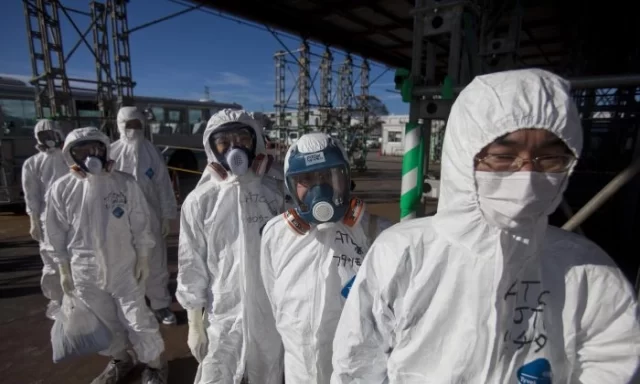
This is what I found recently as memories on Facebook, of all places, written while I was covering Tokyo Electric Power Co., the utility operating the nuclear power plant in Fukushima that sank into meltdowns after the March 11, 2011 tsunami. I didn’t even remember having written this. It brings back memories so horrible they are almost absurd, even comical, if they weren’t so real and literally catastrophic. I don’t remember why I didn’t share these 12 posts on my then brand new web site, although I went on to write a whole play about the nuclear disaster: NEWS FROM FUKUSHIMA. What made the TEPCO Correspondence so endearing, while also chilling, to read for me now is that, well, it all really happened. I was there, every day, watching the events unfold, filing the news, all the while praying Japan would be saved. But in retrospect, we were lucky as reporters. At least we were busy. One day, a TEPCO official in charge of media runs into the room, where all the media people practically lived at that time in TEPCO headquarters. He comes in running and shouting that a system at one of the reactors has broken down. There might be yet another meltdown. All we do is busily file alerts. But then he runs back in again, shouting: It’s fixed. It’s fixed. I’m telling you: A big cheer went up in that room. Sometimes there are moments like that. When what is happening is bigger than the next news story, and all we can do is rejoice as people.
TEPCO Correspondence: Notes From a Writer Beyond the Headlines
By YURI KAGEYAMA
April 2011
1
Heard at TEPCO: Company spokesman Junichi Matsumoto’s description of “a meltdown,” when asked by a reporter for “an image” _ “The core is DORO DORO gooey and BOTA BOTA drip-drop melting to the bottom of the reactor.”
2
On my way to NISA, the Nuclear and Industrial Safety Agency, from Kasumigaseki subway station, I pass by the bookstore that sells government reports and booklets. The shop window had a big poster for a book about nuclear power that said: “Peaceful Energy.” It made me want to cry.
3
Japanese are sensitive to the fears about radiation. Our nation is the only one in the world to have experienced atomic bombings. I have grown up hearing horror stories and seeing photos not only of charred bodies, disfiguring burns and skeletal buildings but also about illnesses that crept up years later, sometimes extending over generations.
4
That is why the poster is touting the glories of nuclear power as “peaceful.”
5
We have been told there is a five-layer protection against radioactive leaks at nuclear plants _ the pellets are encased in coatings, and inside rods that are in a vessel, which in turn is inside another chamber, and that is encased in a building. The building bit is what blew up to bits at reactors 1 and 3 shortly after the March 11 tsunami.
6
So there goes that layer.
7
The pellets are believed to be doing all that doro doro and bota bota inside the core. So much for those layers. The massive leak of highly radioactive water near reactor 2 means without a doubt that the chamber layer has been compromised, if not something even closer to the pellets.
8
So where are those five layers of safety that were supposed to protect the people of Japan?
How could they have said there would be a fivefold guarantee of safety if all the layers were so fragile?
9
There is talk of unifying the now separate news conferences by NISA amd TEPCO on the nuclear crisis. NISA spokesman Hidehiko Nishiyama said there were complaints about inconsistencies in the message. I hope they take all the questions. With so many parties involved, on such a complex topic, coverage is likely to remain arduous.
10
For the first few weeks after March 11, TEPCO officials kept telling us: This is not Three Mile Island.
As Fukushima Daiicihi began spewing highly radioactive water into the sea and radiation was detected in spinach, tap water and the air we breathe, they stopped saying that.
11
But they kept telling us: This is not Chernobyl.
The government declared FD a Level 7, the same as Chernobyl, on April 12.
They no longer tell us what this is not _ they just look sad and helpless.
12
Some reporters are frustrated by the briefings at TEPCO, the flipflopping, the don’t knows, evasive answers, sometimes the wrong numbers, off by a few decimal points. “Is this Iwo Jima?” one angry reporter said. “Maybe all we can hope for is a kamikaze (divine wind) to blow and save us,” another said sadly.
Tokyo Correspondence: Notes From a Writer Beyond the Headlines
I kept a blog from 2007 before I started this site in 2011. Here’s the link below. I’m also sharing after this TEPCO CORRESPONDENCE: Notes From a Writer Beyond the Headlines. Those are my posts on Facebook in 2011, while I was covering the utility behind the Fukushima nuclear disaster. It’s amazing to run across bits of your past self _ and what you wrote then. Both so clearly you and not you at all. Yet totally the truth. And all that makes you you.
Having just returned from visiting the U.S., I was struck by how bathrooms (both toilets and bathing facilities) are really super nice in Japan _ clean, everything works, the hot water actually comes out in ample quantity, the tiles aren’t cracked, overall pleasant design/appearance if not just outright intelligent etc. _ and all this is available for those living in cheap housing, staying at affordable hotels/inns, and of course public spaces.
When you think about what Freud theorizes, the state of toilets speaks a lot about the thinking in a society, about its views on “equaltity,” what is treasured, and the innermost darkest obsessions. (maybe, anyway).
Here ICYMI is the AP Story I did when the Wim Wenders project was first announced and he talks about the film’s setting and the deep meaning of “restrooms”
https://apnews.com/article/science-oddities-entertainment-japan-05a4d0139ed0002ba137e43ff962e1f1
A Letter to Isaku
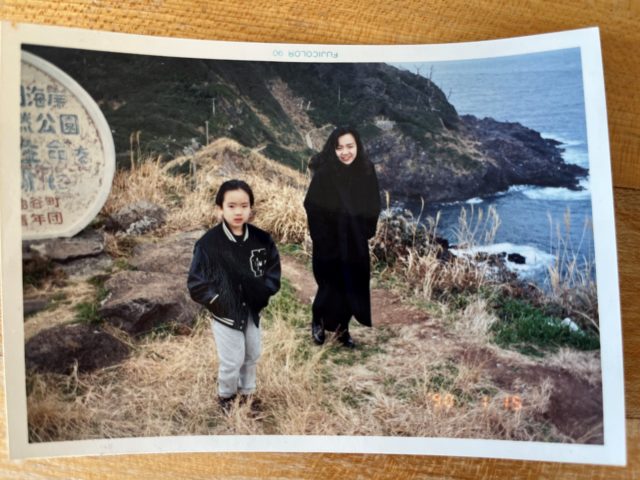
This came from a corner of my desk when I was cleaning up recently. It’s a letter I wrote to Isaku as part of a school requirement. I still like this letter, and I will keep it.
Spring 1998
Isaku
When you were still unborn, you were already someone I knew very well. I could feel you thinking inside my stomach, sucking on your thumb, looking at your tiny toes, jumping with surprise _ with me _ when something startling happened, like a dog barking out of the blue.
I hope I don’t embarrass you with this letter, which Brother John O’Donnell tells me you will have to read before your schoolmates. But I would like you to know that I love you very much. And nothing will change that, ever.
These days, I feel you are sometimes unsure about your future. That’s understandable. Like other Sophomores, you are still so young, yet important decisions are coming up on you fast.
Having two nationalities, two cultures and languages may seem a bit confusing, but it merely opens up more choices for you. You don’t have to close the doors of opportunity too hastily. You have plenty of time. Be strong and believe in yourself, although it is OK to be weak, and you are not alone. Many people, including your teachers and friends who care about you, are there to help you.
I hope you do your best in your studies and try to grow up to be a fine young man. The world is a beautiful place, but it is filled with many problems and needs young people like you to care and at least give it a good try to bring about a change for the better.
I thank God every day for making you part of my life. I thank God for keeping you safe.
It is only after becoming a mother and watching you gradually grow into adulthood that I finally know why God chose to come to us as a little boy who grew up among us. He knew that would make it so easy for us to love Him. It seems such a very simple and so obvious a fact, I don’t know why I didn’t think of it before.
Have a good retreat,
Mom

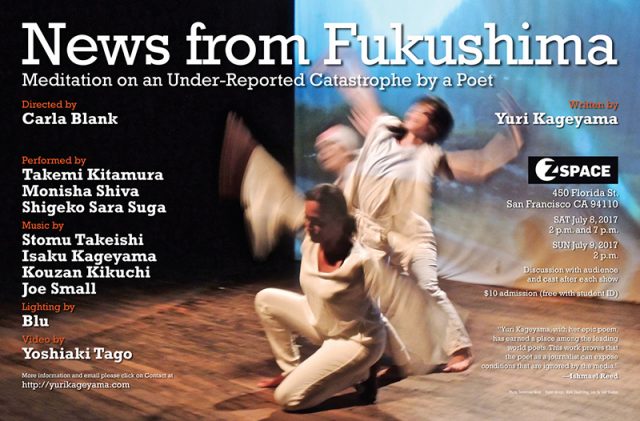
NEWS FROM FUKUSHIMA: Meditation On An Under-Reported Catastrophe By A Poet is an Official Selection. Screening at LetLive Theater in Los Angeles SAT March 2, 2024 7:30 p.m. I am happy, grateful, honored. Thanks to my theater and film directors, Carla Blank and Yoshiaki Tago, my brilliant tireless multicultural cast, my dedicated crew and team, everyone who stuck with and believed in my writing.