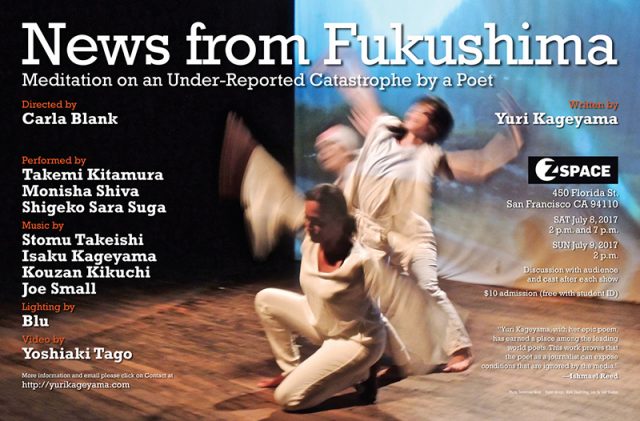
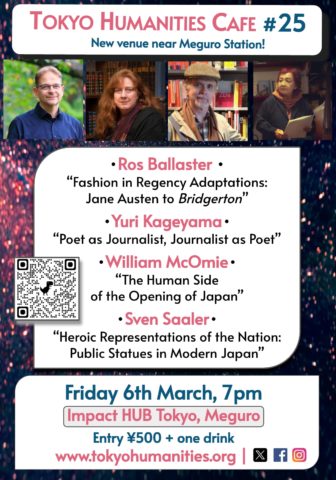
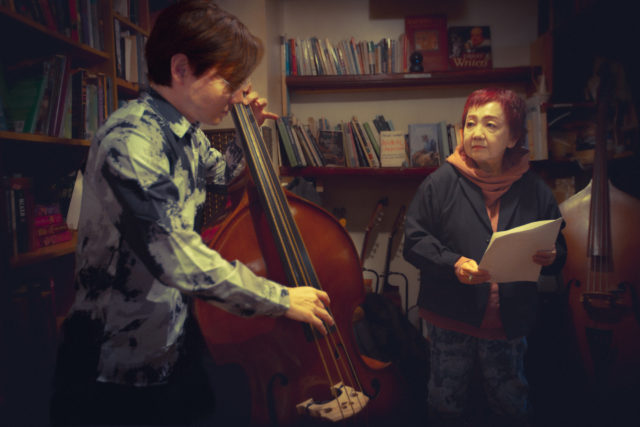
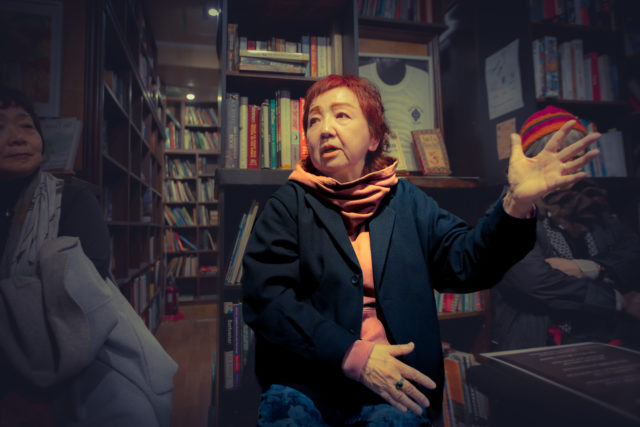
I’m talking about my work, both my journalism _ and my poetry _ at this event in Tokyo. I initially wrote, “Rarely have the two sides of my writing met, but they will at Tokyo Humanities Cafe FRI March 6, 2026.” But, on second thought, they have always been one and the same.
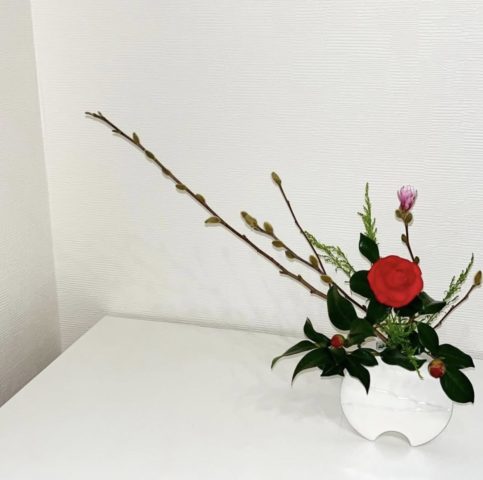
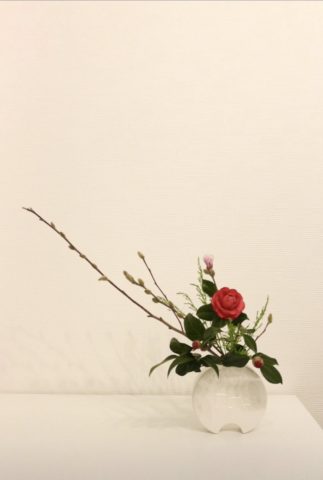
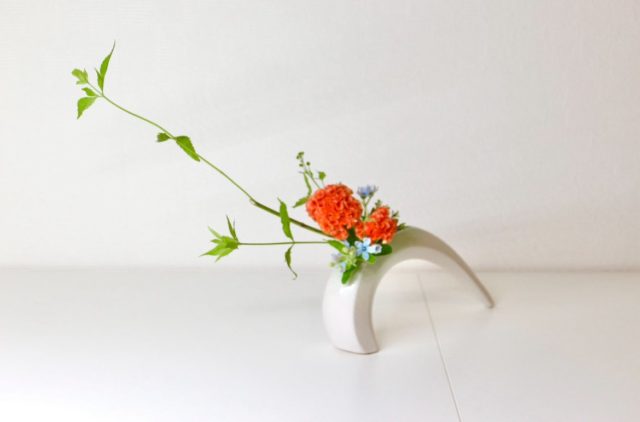
I like how the selection of the items today are a bit unexpected or unusual. Yet the way they have been arranged looks as though that’s how they would have been growing in nature, although of course every element is carefully planned and intended, and not a coincidence at all. I find how everything is calculated, down to every detail, to look natural, that is by chance and not calculated, as very Ikenobo _ and in a sense so Japanese. The link to Ikenobo No. 9 and earlier ikebana.
I was invited by some poets in Japan to join an online project where we write a poem every day. A theme is assigned for everyone for each day. Today’s was “reset.” I decided to write my first poem of 2026 as haiku. And so here goes:
HAIKU FOR RESET
by Yuri Kageyama
Jan. 1, 2026
Pain loss empty love
Every day moment breath
It’s still here live it
YOUR JACKET
by Yuri Kageyama
Jan. 2, 2026
Alone
I sit here,
And you have left your jacket
The blue jeans jacket
With the golden snap buttons _ and the one that is missing
_ with the zipper zipping up and down on the shoulders, the
pockets, the arms _
Then discover, caught in one, your hair _ black, black
and long _ a wavy dark thread
Too big, the sleeves hang limp over my hands;
I am in your jacket, in you _ almost _
Almost the way you feel so good against and inside of me
I’m covered
By the cast skin of your skin
Like the dry brown shells that
Yellow butterflies leave
behind
I smell your smell
They way a baby smiles
inside
The Mother’s arms _
thick and soft and
there
always, always _
I will sleep with your jacket _
cuddle it, feeling it under my palms, kiss it, tell it my dreams
I smell your smell, resting my cheek against a sleeve
I smell your smell
breathing deep
and deeper
I miss and wish it were
you
But your jacket has fallen asleep
quietly
Next to me.
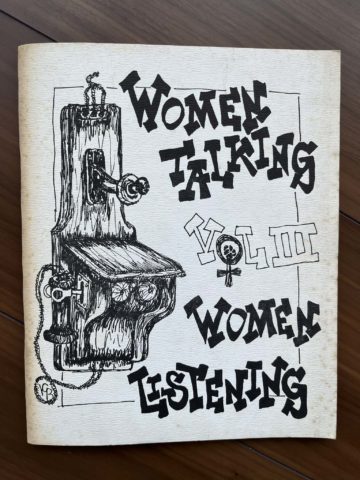
This is a poem I wrote some time back so it is about young love. I decided I still like this poem and so I didn’t change a word. It’s wonderful this challenge made me remember the poem, all of a sudden. It took some rummaging through stacks of books and drawers that hadn’t been opened in ages, but I did find it, published in a literary magazine called Women Talking Women Listening, out of California. Now this poem is reborn, online. I am so happy. Today’s theme was “jacket.”
ZEN
by Yuri Kageyama
Jan. 3, 2026
Close your eyes
Forget
Those grudges
You will never forget
Even those
You’ve long forgotten
Like old cotton fog
Burn a single stick of incense
Preferably
The one that smells like lavender
But is deep orange in color
Take a deep breath
Wipe out those faces, those voices, those aches,
Slaps, kicks, abuse, ridicule, words and thoughts that hurt
Hurled not at others by you
But by others to you
And now forget about you
Or anyone else
Your children
Your grandchildren
Including those you never had
The love of your life
You had that
And let nothingness seep in
Like that old cotton fog
Except
Now
It’s clear
Invisible
And nothing matters
CHAOS
by Yuri Kageyama
Jan. 4, 2026
The House on Second Avenue
The shutters are always banging
A drum machine keeping time
Down the block from Eddie Moore’s house
Around the corner from Russel Baba’s house
^__<
The House on Second Avenue
Robert Kikuchi Yngojo from San Jose
And Duke Santos, a conga player who’s also a
Paramedic saving lives on the ambulance,
Live in the basement rooms
^__<
The House on Second Avenue
Rickety wooden stairs lead to our doorway,
We’re upstairs, you and me,
With Aileen, who plays the qin,
And Richard, who’s white and gay
^__<
The House on Second Avenue
We share the kitchen, bathrooms, our dreams,
Not a care in the world except for Truth,
Justice, John Coltrane;
Musicians, dancers, poets
^__<
The House on Second Avenue
We could walk to Golden Gate Park
Or down to Clement Street
We’d sit for hours over coffee and a croissant
And run into Randy Senzaki’s wife strolling their son
^__<
The House on Second Avenue
Birds taking flight in a buzzing hushed whirl
From that tree right outside our window
Doves, you’d call them,
Though I knew they’re just pigeons
^__<
The House on Second Avenue
Where magic brewed and ceilings shook,
In time to the downbeat during rehearsals
And to promises of forever at night,
All shrugged off like the breaths we took
BOOK
by Yuri Kageyama
Jan. 5, 2026
Let’s read a book together, Mommy
You would say in that sweet little child voice
Eric Carle, Dr. Seuss, Maurice Sendak
Margaret Wise Brown
That faraway smell of paper with ink
We breathe in together as we turn the pages
Your warm body snuggled next to mine
Bedtime story time
That daily ritual
Like the morning cereal with “mook”
Our adventures gliding on the stroller
We forget when it ended
Just the way I was never sure
When you’d fallen asleep
IMPOSTER
by Yuri Kageyama
Jan. 6, 2026
We laugh at the jokes
Ride the bus standing still
Show up at the office
Read emails
Take a lunch break
After the Zoom
A shadow
Lining the landscape
Never questioning
No matter how illiterate or inane
Devoted to being normal
Uncontested, conforming, proven
Making sure
That deadly darkness
Never shows
Except in poetry
Scribbled in secret
Like silent gems
CONVERSATION
by Yuri Kageyama
Jan. 7, 2026
My recent poem “What Do You Think” is perfect for today’s word, “Conversation.” And the perfect song below by Ryu Miho.
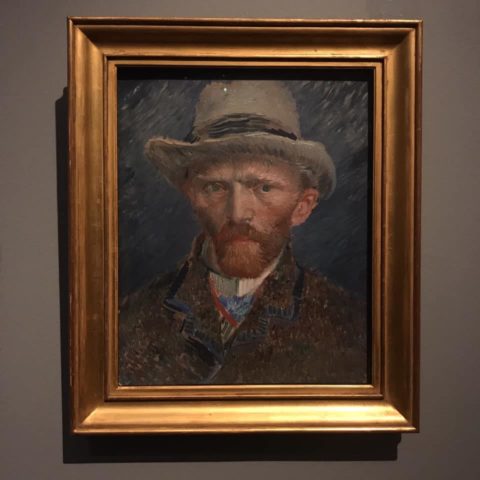
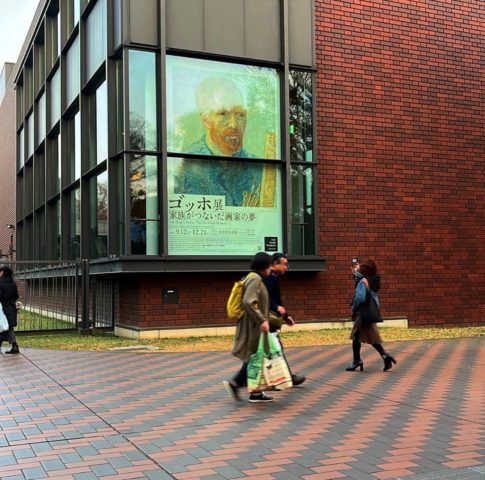
Years ago, I went to the Van Gogh Museum in Amsterdam. Today, I saw the works again in Tokyo. I once asked my partner if Van Gogh was happy having all these people gawking at his works, likely for the wrong reasons. And he assured me Van Gogh was happy.
Alien
by Yuri Kageyama
Jan. 9, 2026
Ching Chong Chinaman
Sitting on a fence
That sing-song taunt
That face in your face
Skin stretched way back
Till eyes are slanted slits
The freckled boy
Spits out that word
Laughing on the school bus
I had to come home and
Ask my father
What it meant: Jap
EMERGENCY
by Yuri Kageyama
Jan. 10, 2026
The ground shook and shook
On that day, March 11, 2011,
For a very long time
The earth was heaving madly
It felt like everything was ready to end
But that was just the beginning
Smoke spewed on the TV news
As reactors sank into meltdowns
In the worst nuclear disaster since Chernobyl
LULLABYE
by Yuri Kageyama
Jan. 11. 2026
Neeen nen Okohrori Okohroriyoooo
Booya wa Iiikoda Neeen ne Shi nah
You would always start crying
When I sang that old lullabye
Not crying sad
But just soooooo moved
Though you probably didn’t
Understand the words
It’s a feeling
Handed down generations
Over starry nights
From the Edo Era
No one remembers the writers
But all mothers sing
That mother of songs
So hushed you can barely hear it
You are so precious
You are a good boy
We have so much to do tomorrow
But let’s go to sleep now
CANDLE
by Yuri Kageyama
Jan. 12, 2026
Can’t have them lit
Around the house
Because Japan has
Earthquakes
So it’s not safe
Although their flickering flames
Wafting wax scent
Glimmering glow of soft orange
We all remember growing up
When the power went out
After the shakings
And we look at each other
Bright round faces
Gathered around fear
Staring together
At that one source of light
TRIBE
by Yuri Kageyama
Jan. 13, 2026
Mono no aware
To be or not to be
Things fall apart
A room of one’s own
The sound of water
One hundred years of solitude
So blessed we are
To be natives
Of this eternal tribe
7-ELEVEN
by Yuri Kageyama
Jan. 14, 2026
She’s punching the cash register
The name tag says “Pretty” in romaji,
Her mother chose that name
The newborn was so pretty
I don’t ask her where she is from
Maybe Vietnam, maybe China, I don’t ask
It’s enough that she is Pretty
I remember being in Pyongyang
For a reporting trip many years ago,
The young man assigned to guide us
Told me he knows a Japanese song
Then sang in perfect Japanese
Konnichiwa akachan
Hello, my little baby, hello
ELSEWHERE
by Yuri Kageyama
Jan. 15, 2026
This is the song that should be playing in the background for my poem.
It’s been months
But you are still here
Your guitar
A closet drawer filled with Hanes underwear
Joe Pass Chord Solos
The note you wrote to yourself
On a piece of recycled cardboard:
“What is depression if not life stripped of its illusions”
Like all your notes, words scribbled and sheet music,
The amp in that huge black case with wheels
You wanted to give away to Hide
You told me you can no longer play
But I wanted to keep it and still do
Just like I never will let you go
I will keep seeing you, feeling your touch
Talk to me, talk to yourself,
Whispering our son’s name again and again
Then the magic words: “My son”
Please stay
Close
Here
This whole challenge has made me write things I’d never had thought of writing. That’s because we almost always start with our own topics, whatever we have been thinking about. We take that for granted. Now we have to reach to places we wouldn’t have otherwise gone, like scratching that spot on your back. Or feeling something in your brain behind your ear give. It’s sometimes a painful experience. But you know it’s good for you, as a poet, as a person who is alive, and a part of humanity, as that is what this group reminds us there is.
FRAME
by Yuri Kageyama
Jan. 16, 2026
Many years ago,
I knew a violin player
Raymond Cheng
Really a genius
Known as The Wizard
Recorded with Lester Bowie
Wild glorious notes coming from nowhere
And then sinking deep in people’s souls
Skinny, soft-spoken,
Raymond once asked me at Jigoku’s, a J-town bar,
To watch his violin
And being so young and scattered
I didn’t pay much attention to his instrument
Which probably cost as much as a luxury car
I was told, wow, he really likes you,
Raymond asking you to watch his violin
As though that was very special
But it was no more special
Than the innocence of youth
The love songs we wrote to hum by the day
And the stars that became gems at night
CRYSTAL
by Yuri Kageyama
Jan. 17, 2026
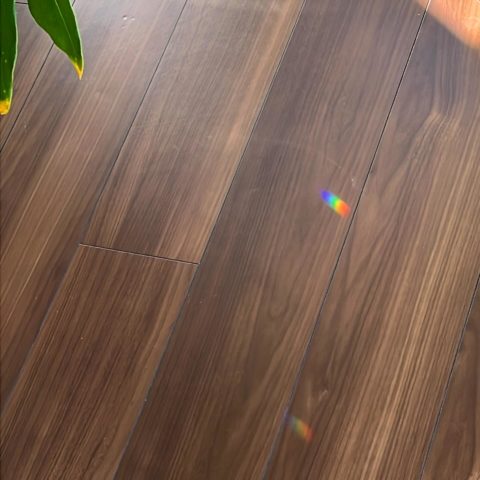
The little crystal snowflake hanging from a branch
Flashes a mini rainbow on our apartment ceiling
Always glimmering clearly if you care to look
Though it has all these colors inside, ready to break out
It’s like how you just smile when I say the most horrid things
About your music, that it wasn’t yours at all,
But the geniuses you played with
You knew I was just angry
And I love you, and your music, so much
You, being wise to the crystal-clear fact
That it’s everybody’s music
OVERFLOW
by Yuri Kageyama
Jan. 18, 2026
Tears are stored in your system. They come out when the valve gets turned. Unfortunately, the valve is not in your control. At first, when the sorrow hits, it’s numb and doesn’t turn on at all. There are no tears. After about half a year, for some reason, the tears start coming, but there is still no control. It happens when you see objects that remind you of this happening, this person, this sorrow, the memories. Often in the morning. But sometimes at night, too. I am not sure what the experts say. If it’s good for your state of mind, soothing and healing and therapeutic. Or if it just makes things worse. And it’s better to try to forget. It doesn’t matter anyway. You don’t really have a choice. It goes on for years, I’m told. Because the love you feel is so much greater than all the tears combined.
TRACE
by Yuri Kageyama
Jan. 19. 2026
My son Isaku made a song using AI Sono from my poem. It’s really nice so please check it out from the SoundCloud link below:
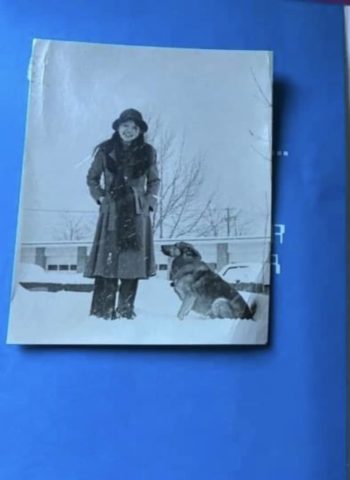
This photo my friend saved from many years back just popped up on social media. That’s Columbo back when I was a student at Cornell. Isn’t he so perfectly gorgeous? I probably have photos of Pyonta somewhere, too.
MIRROR
by Yuri Kageyama
Jan. 26, 2026
I hate seeing my reflection in the mirror.
I always look away.
It’s not that I consider myself utterly ugly.
I’m just embarrassed.
The same way I can never smile in photos.
That person looking back, oddly visible.
When a face should be simply a window
Used to look out from what’s within.
SKELETON
by Yuri Kageyama
Jan. 27, 2026
My poet friend says
She is a top candidate
To be one of those people
In the news lately
Who’re found dead
Alone in their Apartments
Days, weeks, maybe months after;
No one cared to notice
Until a strange smell wafted
Through the door?
Kodokushi, it’s called in Japan,
Yes, there is a special term,
So common here,
Where the population is aging
And no one is getting married
Or having children;
One’s fate is to die alone
Some check into nursing homes ahead of time
Those less fortunate get found after the fact
LIES
by Yuri Kageyama
Jan. 28, 2026
You tell me I look nice
When I get my hair done
Or wear a new outfit
Never mind
I usually have to point out
I got my hair done or bought new clothes
It’s just to say: I love you
The same way I love you
And always have, from the day we met
So many many many many years ago
It’s not a lie; of course, not
Because nothing has changed
The absolute, never changing, total truth
POP
Sharing a poetry reading from seven years ago by Yuri Kageyama
Jan. 29, 2026
A collaboration with artist Munenori Tamagawa, who considers himself the Basquiat of Japan, Radio the Artist, who live-painted with Munenori and did the video below, and Hirokazu Jackson Suyama on percussion. Our bit starts at 6:00 minutes, and it fits the word for today, “POP.”
SMILE
by Yuri Kageyama
Jan. 30, 2026
You smiled
Suddenly
In the silence after your first breath of a wail
So still and serious,
Testing the corner muscles of your mouth
Forgetting for a moment your instinct to suckle
Looking with your miracle almond eyes into my eyes,
Hello
Hello
Hello
Pleased to meet you.
A tiny crooked
But perfect
Smile.
They say:
Newborns don’t smile for weeks.
I decide
You are just a genius
Today’s word was “Smile.” This is a poem I wrote some years ago but it seemed to fit the bill, although the original title was “The Crooked Smile,” but “Smile” is a better title. I remember like it was yesterday, that moment, and how happy he was _ the man, who’d just become a father. He carried the swaddled newborn around in the hospital like it was the most precious thing. The saxophone player who was his best friend laughed and said when his son was born a few years ago, he’d thrown him in the air. I hope that wasn’t moments after the birth. Birth is a wonderful moment. And welcoming this special person into this world is a big smile that we should remember forever. Stop crying. Smile.
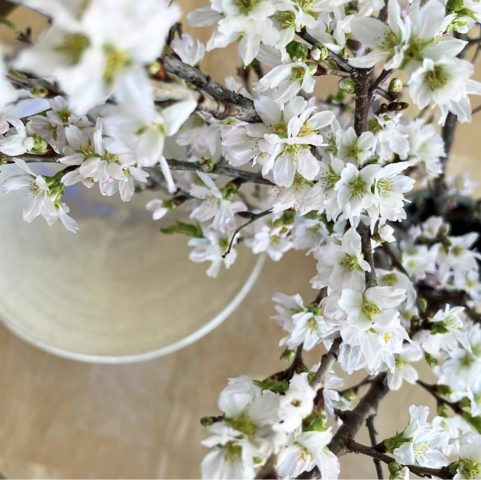
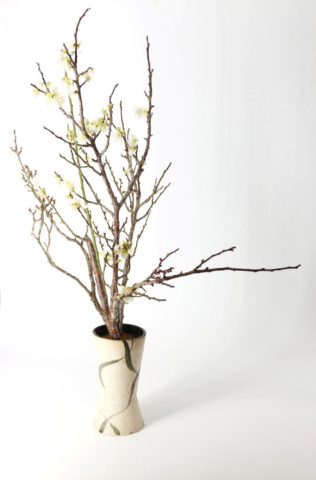
Today the teacher worked very hard to bring plum blossoms that evoke the coming of spring like the warbling of the uguisu Japanese nightingale, which is what he said I requested for my lesson last time we spoke. I probably really said that, although I don’t remember clearly about the uguisu. Anyway, what he helped me create today was truly worthy of that kind of whimsical dream.
My AP Story Nov. 21, 2025, a co-byline with my colleague Terry, about the “rental family” business in Japan and the Hollywood film starring Brendan Fraser it inspired. Click on the link below to see the Video for the Story:
My AP Story July 8, 2025 on Japanese boxing star Junto Nakatani, a story relayed to the world as a Top Story for The Associated Press.
As a reporter, I am privileged to meet some of the best people in the world, like this champion, Junto Nakatani. When I asked him about how he is always smiling, even in the ring, he told me matter-of-factly that it is a disadvantage to get angry because “you lose control.” Obviously, boxing is all about winning. He also said he believes winning by knockout is what is “expected” of him. And I felt like a mom, as I often do at interviews, and in life, because I am one, and couldn’t help but respond with an empathetic: “Hey, it’s OK to just win.” Which goes to say that Nakatani is a very special person _ to bring that out in you.
This arrangement has the feel of autumn. The yellow chrysanthemums are the main objects. But the susuki grass blades add dynamism to the composition, while the brown-tinged leaves to the side have their own distinct personality.
My teacher said it was interesting I kept the blades long, and very much like me, which I think he meant in a positive way, as in a free spirit.
I was allowed to choose my vase and so it’s a rather unusual shape this time that really stimulates your imagination as to where the leaves and flowers should be, can be, wants to be, or are speaking to your soul to be. The beauty of Ikebana is that it is a conversation, silent but certain, not only with the elements of Nature but also with things like a vase, specially made by an artist for Ikenobo Ikebana, an individual. You are also relating to many other people, your ikebana teacher, of course, and your inner self, but, more significantly, memories of people, like your mother, who taught you your first lessons in ikebana, pride and joy in your Japanese heritage, and recognizing beauty and the message of impermanence in Life.