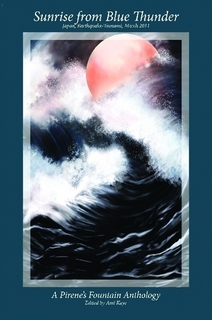
My haiku is in this poetry anthology “Sunrise From Blue Thunder,” a benefit for the relief efforts for the 3.11 earthquake and tsunami in northeastern Japan.
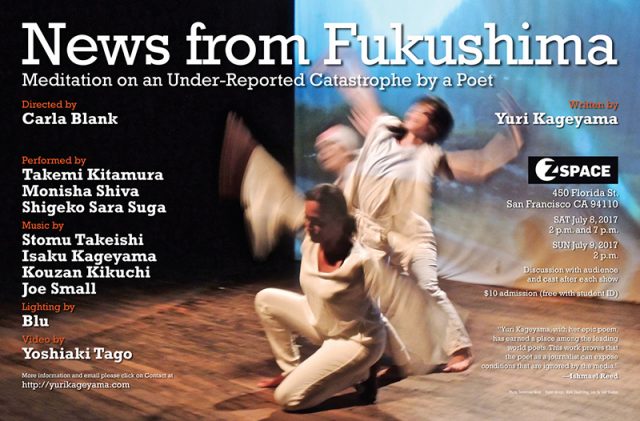
My haiku is in this poetry anthology “Sunrise From Blue Thunder,” a benefit for the relief efforts for the 3.11 earthquake and tsunami in northeastern Japan.
It’s always great to have your child back home.
But Isaku on vacation from his studies at Berklee College of Music brought back something special: His music that is moving on in new directions.
He kept busy during his couple of weeks in Tokyo.
He played with Winchester Nii Tete, a brilliant percussionist from Ghana.
He is also having some fun with great Japanese musicians he met in Boston.
The journey never stops.
It’s a journey about your Self and your Life and your Art.
And so it keeps going and gets better _ if your Soul and Spirit and Mind are in the Right Place.
It is so very sad to see him leave _ to continue his studies at Berklee.
But it is my joy and pride to know Isaku not just as the son I love but also as a powerful musician with a vision that I also believe in, and I believe the world’s top artists share.
Come home again soon.
 My two poems “Haiku for Van Gogh” and “how to say ‘yes’ in Japanese” (coincidentally read in Tokyo recently) are published in Pirene’s Fountain.
The bio and poetry from inside the pages of the latest issue:
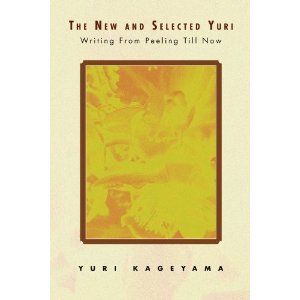
Yuri Kageyama is a poet and writer of bilingual and bicultural upbringing, born in Japan and growing up in Maryland, Tokyo and Alabama. She has two books, “The New and Selected Yuri: Writing From Peeling Till Now” (Ishmael Reed Publishing Co.) and “Peeling” (I. Reed Books). Her works appear in many literary anthologies and magazines, including “Y’Bird,” “Greenfield Review,” “San Francisco Stories,” “On a Bed of Rice,” “Breaking Silence: an Anthology of Asian American Poets,” “POW WOW: Charting the Fault Lines in the American Experience _ Short Fiction from Then to Now,” “Other Side River,” “Beyond Rice,” “Yellow Silk,” “Stories We Hold Secret,” “KONCH” and “MultiAmerica.” She has read with Ishmael Reed, Shuntaro Tanikawa, Eric Kamau Gravatt, Geraldine Kudaka, Victor Hernandez Cruz, Winchester Nii Tete, Seamus Heaney, Takenari Shibata, Shozu Ben and many other artists. She is a magna cum laude graduate of Cornell University and holds an M.A. from the University of California, Berkeley. She is working on an oral history of Tokyo taiko drumming group Amanojaku, where her son Isaku Kageyama is a principal drummer. yurikageyama.com
Haiku for Van Gogh | ways of saying ‘yes’ in Japanese
Haiku for Van Gogh
An old wooden desk
Yellow dots of light shrieking
Van Gogh’s room
Warped plums dagger rain
Crazed geisha dance in ukiyoe oil
Breathe Van Gogh’s Japan
Sliced ear of love denied
Road to nothing ravens in flight
Genius of yellow
ways of saying ‘yes’ in Japanese
“Hai!!”
That’s the correct way of replying when spoken to in Japan for centuries, hai! the way people are taught in school, by their parents, what’s right in society _
respect for the hierarchy, yes sir, thank you ma’am, hai hai hai, like hiccups, like hiphiphurray, hai! hai! hai! no pause, no hesitation, no thought,
following orders, quick, no questions, grunt it out, soldiers at attention, yelling, spitting, believing, say it with all your heart and mind,
hai!
“Haa~aai!”
That’s the way people answer in Japan these says, haa~aai! the way people drop out of school, freeters, parents are just friends to follow only on Twitter _
flattening out the hierarchy, maybe yes, maybe not, haa~aai! like a mumble, like a whisper, a kiss on the ear, haa~aai, innocent, hurt only for others,
wind blowing in your hair, smiley faces heart icons in cell phones, improvise, imagine, immaculate, sing it without a care in the world,
haa~aai!
Isaku is in another Berklee College of Music project _ this time a tribute to Aung San Suu Kyi:
Music & Lyrics Sara Gamon, Arrangement Galen Willett, Lead Vocal Tiffany Wilson, Ensemble Shilpa Ananth, A.A. Enriquez, Joanne Jett Galindo, Yun Huang, James Miring’u Kamwati, Minako Yabe, Rendra Zawawi, Congas Enø & Judith Soberanes, Drumset Andrés Marín, Bass Galen Willett, Guitar Nat Svecha Saralamba, Taiko Drums Isaku Kageyama, Auxiliary Percussion Yuki Kanesaka, Andrés Marín, Sean Peters, Galen Willett. Produced by Sara Gamon, Mixed and Mastered by Takuto Kaneko, Video by Paulette Waltz. Thanks to Berklee College of Music.
Trailer for a project at Berklee College of Music in Boston, created and led by Emir Cerman, that brings together musicians from around the world including Isaku Kageyama .
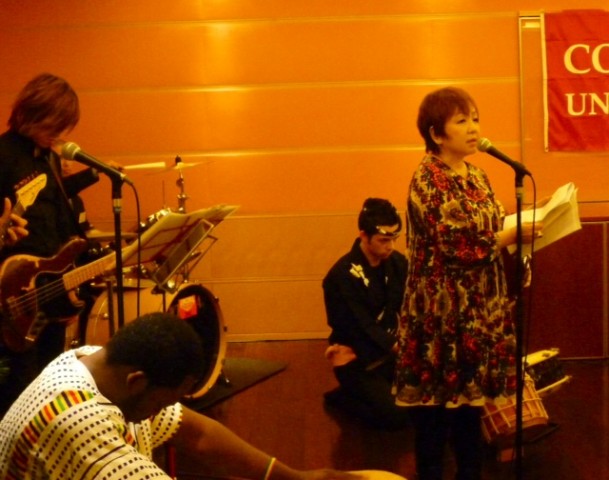
Tokyo Yuricane Reading: Poetry by Yuri Kageyama with Taiko drums by Chris Holland, percussion by Winchester Nii Tete, guitar by Takenari Shibata, bass by Satoshi Adachi, drums by Jin Imamura.
I feel decidedly good about the future of Japan (and the world) when I work with young musicians like the ones who played _ and so sincerely and so passionately _ as the Tokyo members of The Yuricane, with my poetry reading Dec. 3, 2011 at the Tokyo American Club.
The world is in good hands _ if only it would allow the right people to get their hands on what happens.
One of the relatively new works we tried out, using different percussion to highlight the contrasts/evolution:
ways of saying ‘yes’ in Japanese
a poem by Yuri Kageyama
“Hai!!”
That’s the correct way of replying when spoken to in Japan for centuries, hai! the way people are taught in school, by their parents, what’s right in society _
respect for the hierarchy, yes sir, thank you ma’am, hai hai hai, like hiccups, like hiphiphurray, hai! hai! hai! no pause, no hesitation, no thought,
following orders, quick, no questions, grunt it out, soldiers at attention, yelling, spitting, believing, say it with all your heart and mind,
hai!
“Haa~aai!”
That’s the way people answer in Japan these says, haa~aai! the way people drop out of school, freeters, parents are just friends to follow only on Twitter _
flattening out the hierarchy, maybe yes, maybe not, haa~aai! like a mumble, like a whisper, a kiss on the ear, haa~aai, innocent, hurt only for others,
wind blowing in your hair, smiley faces heart icons in cell phones, improvise, imagine, immaculate, sing it without a care in the world,
haa~aai!
Haiku for Van Gogh
by Yuri Kageyama
An old wooden desk
Yellow dots of light shrieking
Van Gogh’s room
Warped plums dagger rain
Crazed geisha dance in ukiyoe oil
Breathe Van Gogh’s Japan
Sliced ear of love denied
Road to nothing ravens in flight
Genius of yellow
A review by poet Ravi Chandra’s of my latest book, “The New and Selected Yuri: Writing From Peeling Till Now,” (Ishmael Reed Publishing Co., 2011.)
I met Yuri Kageyama at an event honoring Ishmael Reed at LitQuake. Yuri performed her piece “Little YELLOW Slut”, a powerful spoken word piece that punctuates stereotypes of Asian American women with the judgmental projection “Little YELLOW SluT.”
I was immediately taken by this piece, and was proud to soon be carrying Kageyama’s latest collection of work, which she generously gifted me in exchange for my modest first book, “a fox peeks out: poems.”
I was very impressed by Kageyama’s poetry and prose, which are both a tender and raw depiction of her Asian American sexuality and political mindset.
Some of the poems are in what’s now called the “wordfist” tradition, like “BIG WHITE BITCH,” taking aim at and taking down the oppressive forces of racism and sexism with a uniquely feminine yet tough-spoken mindset.
These are angry and direct. Some might find them shocking, but I found them vivid and real.
Others are a lament _ of childhood abuse by her rocket scientist father and of sitting next to him as he lay dying.
There are also many prose pieces. One discusses Japanese concepts such as Kakijun, Enryo and Iki. Another is a perhaps semi-autobiographical look back at 1970’s political-poetic movements in San Francisco.
Another is a dialogue between her and a younger Asian American woman living in Japan and struggling for relationship and power _ possibly a younger version of herself.
This is an emininently readable and enjoyable collection.
I found myself in turns challenged and entertained by the sheer soul-force of the person who comes shining through these words. Close to the heart, close to the soul, deeply human and remarkable. Recommended.
^___< And here is my review, in turn, of Chandra’s book:
A lot of poetry, probably including much of my own, is destructive, addressing inner turmoils to give them a form of expression as literature than other equally tempting but less acceptable, perhaps even criminal, outlets.
Such is the madness of the world around us, the abuse that we take and the psychosis we battle by the day.
Ravi Chandra’s poetry is the voice of calm, the antidote of therapy, the ointment of peace.
Perhaps it is because he is a medical doctor and psychiatrist that he seeks to heal not only internal wounds but almost the entire world around us with his debut poetry book “a fox peeks out _ poems.” (San Francisco: Pacific Heart Books, 2011)
He juxtaposes the technology of the Internet with the tradition of Asian religions in the same poetic breath that is our American experience.
Other types of slam poetry may be identified with street violence and the defiance of oppression.
Chandra’s slam poetry is more like the chamomile tea you sip before bedtime.
His works read almost like a prayer, asking God to keep us safe through another day:
“Heart like earth _ /Mind like sky./ No walls, no weapons, no war/”
The power to soothe and unify through the word involves a risky balance to keep between artistry and platitude.
Chandra pulls it off with the intelligence of a scholar, the insight of a master and, most important, the benevolence of a saint.
“Mountains do get built from earthquakes,/ great masses of earth pushing into each other,/ Pushing the ground up,” he writes in “subprime tsunamis.”
“Greed must be contained by wisdom./ Compassion must be the greatest power./ Only so, can the waters purify./ Only so, can earthquakes/ give ascent,/ instead of annihilation.”
A review by Stephen Hong Sohn, Assistant Professor, English Department, Stanford University, in Asian American Literature Fans Sunday Mega Review Round-Up, Nov. 6, 2011.
Yuri Kageyama is a poet whose work I’ve long been wanting to read, especially since her chapbook “Peeling” has long been out of print. She’s been on the literary scene for a number of decades and her work is both direct and passionate.
In “The New and Selected Yuri,” we get a broad range of poetic works and short prose stories with topics ranging from racism, fetishism, abortion, activism, interracial desire, among other such issues. There’s a lengthier narrative track toward the end of the collection that comes off as playscript: a dialogue between a younger woman named Miu and someone named “Me,” perhaps the ghostly authorial double.
While earlier sections are obviously very pro-choice in terms of the topic of abortion, what’s really interesting in “The Story of Miu” is the question of reproduction and what it means for the ostensible mother.
At one point, “me” states: “I try to tell young women this every chance I get, but it’s the most important experience in life to have a child, Okay?” (108).
Later, when Miu goes through with an abortion, we see that these words of wisdom do not necessarily bear fruit in this specific story. It’s interesting to see Kageyama represent this particular reproductive politic in light of so many of the other poems and reveals a complicated and contoured approach to imagining so-called womanhood.
One of the most obvious things to note offhand about Yuri Kageyama’s writings is that they reveal the anger at the heart of the racialized minority’s experience.
Anger tends to be undertheorized as a complicated and nuanced affectual impulse within cultural studies. The literary critic Sue J. Kim is currently exploring this topic I believe and I am reminded of it when I read Kageyama’s work; she reminds us that there are so many things to be angry about, so many ways to express that anger, and so many ways that anger pushes one to actually go out and do something. Sometimes anger is seen to be an emotional impulse that cuts off, or at worst, is simply an uncalculated violence, but Kageyama pushes us to think of anger as a way to reconsider racialized and gendered subjectivities, the power dynamics that bind and constrain and that one must resist.
In this way, I like to think of Kageyama as a kind of throwback, really rooted in the women of color, post-Civil Rights activist poetics, moving strongly in line with others such as Janice Mirikitani, Nellie Wong, Kitty Tsui, and Merle Woo.
I found this work particularly refreshing in this regard and Kageyama is not necessarily always going for the most lyrically and aesthetically crafted line, but uses elements like anaphora and repetition to strike out at and bring in the audience.
Indeed, I can’t imagine some of these poems without an actual performance and it’s very clear that there is a spoken word dynamic that would lend increased heft to the collection.
The fact that the book was put out by the Ishmael Reed Publishing Group is obviously no accident. Ishmael Reed has long had a very strong engagement with Asian American literary circles, especially and most famously with the “Aiiieeeee!!!” editors way back in the day.
Thus, this book reminds me of the strong comparative minority engagements that we sometimes forget about as we work through our respective race and ethnic studies areas.
A powerful work, and I’m especially glad there is a way to access Kageyama’s writings in one collected source.
Some people, when I ask them to sing along to my poem, don’t want to utter the dreaded words: “Little YELLOW Slut.” Good people don’t want to repeat derogatory phrases. But it’s OK. This is a Poem: saying it will make discrimination, racists and sexists, all evil thoughts go away _ like “oharai” by the shaman.