YOUR MUSIC a poem by Yuri Kageyama

Your Music a poem by Yuri Kageyama

He loved me

More than he loved

His Music

And his Music is

Huge

Because

When you play

That kind of Music

The Music

Is about Everybody

Each Player

Even the listener

But especially the Music

Not just then and there

But all the Music

That went Before

You knew that

So you just smiled

When I said

It wasn’t your Music

And I didn’t even think or know

How much you loved me

Because our love was bigger

Than all that

Music

a link to a sweet musical version on SoundCloud
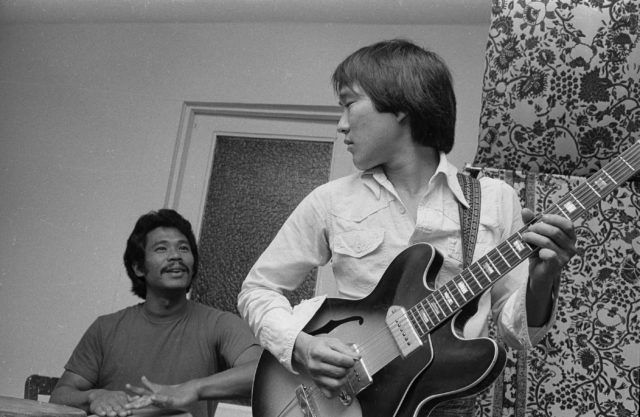
Gordy with Duke in San Francisco 1979. Photo by Bob Hsiang.

I now know it’s all the same thing, love and music. Or the poem, flower arrangement or any other pursuit. It’s about connecting with all that went before you, in all their trials and tribulations, everything. And love is a part of that, your connecting with that person you love. Maybe your friend, your mother, your partner for life. It might get complicated if you are trying to connect with the past, while at the same time trying to connect with that individual, who in turn may also be connecting with the musical or theatrical greats who went before him or her. But, hey, it’s all the same thing. It is how you live and how you choose to connect. And it is definitely a lifelong effort. Worth every second. Filling you with joy and meaning about having known those special connections, and that special person. So do not mourn. Just rejoice. Keep playing, writing, creating and loving.
Questioning auteurs on the meaning of movies

What are movies for you? Why do you keep making movies?

This is before I joined The AP, but I had an opportunity as a young reporter to ask an aging Akira Kurosawa a question: Why do you keep making movies?

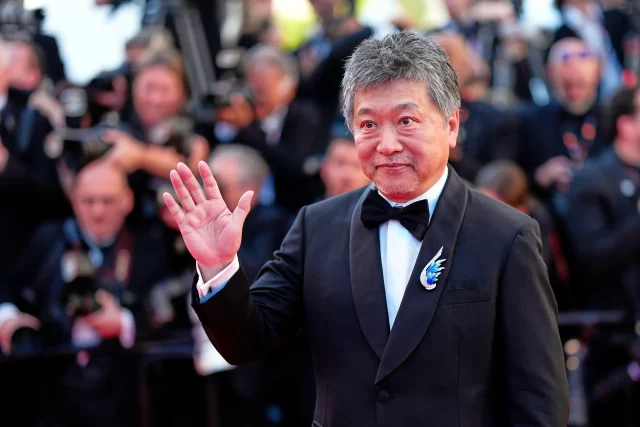
I got to tell that exact story in my recent AP story when I interviewed Hirokazu Kore-eda. Kore-eda of course asked: What was Kurosawa’s answer? I pretended to be surprised: 監督それききます?! You would ask; wouldn’t you? Kore-eda said: Come on, the way we are talking now このながれでは that’s the inevitable question. So I told him how Kurosawa had replied with a childlike but faraway look on his face, as though he was talking to no one in particular, maybe himself: If you take movies away from me, I am left with nothing. 僕から映画をとったらなにものこらないから。And Kore-eda instantly remarked: すばらしい!before he gave his answer about how lucky he was that he has his beloved hobby for a job. That interaction and his answer close my AP story.

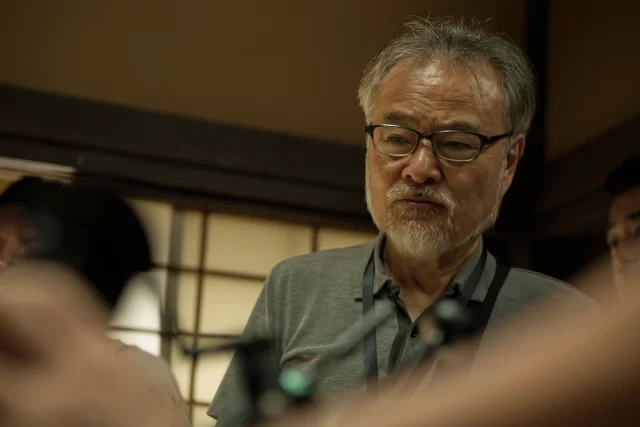
I asked the same question to Kiyoshi Kurosawa, too. And the funny thing was that he didn’t ask what Akira Kurosawa’s answer was _ the entire opposite of Kore-eda’s reaction. He gave his own answer, which is the top part of the story, about how movies are an eternal mystery, and that’s why he keeps making them. Then I asked him: Aren’t you going to ask what Akira Kurosawa said? And then Kiyoshi Kurosawa said: Well, can I ask? Is it OK? So I said: Of course, I was more surprised you didn’t ask. Which goes to show what a nice person he is. When I told him what Akira Kurosawa had said, he said: うまいこというな。Which translates to: Hey, what a clever answer. It’s telling how his answer was a bit different from how Kore-eda had said すばらしい which just means “Fantastic!”

I’m going to keep asking this same question every time I get to interview a great Japanese auteur. BTW Kiyoshi Kurosawa said he had fun being interviewed. たのしかった he said. I’ve lived life and played reporter long enough I get to have fun now and then. Coincidentally an online “memory” popped up about the Akira Kurosawa Question. That said I’d asked: Why do you keep making movies? 監督はなぜ映画をとり続けるのですか? rather than What are movies for you? It’s asking the same question, but maybe in a better way for the stage he was in _ both his life and career as a director. So next time I interview a legendary Japanese director, I would have to ask both questions.    

ISAKU’S SONG FOR HIS FATHER

https://www.epidemicsound.com/track/UHpWS3a76U/

This is a song Isaku wrote for his father, “Sanctity,” featuring Sumie Kaneko on vocals.

あなたからの 贈りもの

遠く離れても 耳をすませば

私の大事な宝もの

か弱い鼓動 今は誇り

惜しむ間もなく 走れども

もう何も耐えることはない

てしおにかけた 我が子ども

もう何も迷うことはない

This is how I’ve translated the words into English:

This gift I got from you

Listen hard, even from afar  

It’s my most precious treasure   

That faint beat is now my pride;

Before one even knows it, that passing of time,  

There is nothing to bear anymore,

That child, you raised with all this love,  

There is no uncertainty anymore

From “Katari Vol. 2 Stories from Japan” by Isaku Kageyama 2025.

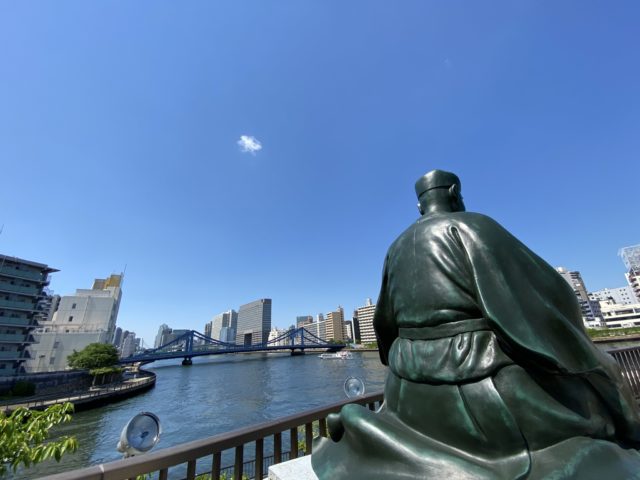
HAIKU FOR BASHO a poem by Yuri Kageyama

Haiku for Basho a poem by Yuri Kageyama

May 3, 2022

眼差しを

無に流すかな

芭蕉のかわ

He is still watching,

Though washed away to nothing-

Ness, Basho’s River

A POEM FOR JOURNALISM by Yuri Kageyama

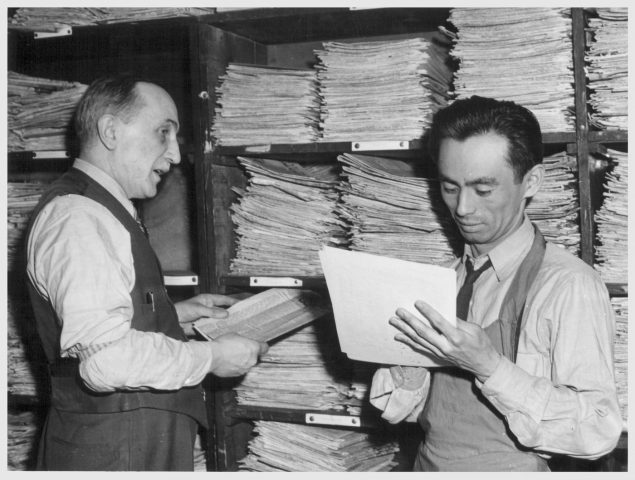
Joe Oyama in an Online California Archives photo, as he stands in the New York headquarters of the Common Council for American Unity. Joe was assistant editor of the Japanese American daily in Los Angeles before he was interned, in Santa Anita Assembly Center and Jerome Relocation Center, where both he and his wife Sami worked as journalists. After moving to New York in 1944, he was editor of the News Letter of the Japanese American Committee for Democracy. He and his wife were also both actors. They moved to Berkeley in their later years. I got to know him and Sami and their two children, who are also great artists. Joe was always supportive of my poetry:

Joe Oyama in an Online California Archives photo, as he stands in the New York headquarters of the Common Council for American Unity. Joe was assistant editor of the Japanese American daily in Los Angeles before he was interned, in Santa Anita Assembly Center and Jerome Relocation Center, where both he and his wife Sami worked as journalists. After moving to New York in 1944, he was editor of the News Letter of the Japanese American Committee for Democracy. He and his wife were also both actors. They moved to Berkeley in their later years. I got to know him and Sami and their two children, who are also great artists. Joe was always supportive of my poetry: “Like champagne,” he said once. This poem is for Joe and all the other great journalists. May the legacy live on.

A Poem for Journalism
By Yuri Kageyama

A Tree, a Story, a Drum
Circles carved times over,
Coded rhythms of continents
Animal skin stretched, carefully nailed,
So our heartbeat is not lost _
The snare, congas, kpanlogo, tabla, taiko,
Talking drums speaking faraway tongues _
Stories killed, stories buried,
Stories denied, stories untold,
Perhaps we were just not stopped before
When our stories were not dangerous
But the Reporter is still here.
Hear the words
And see what they have seen:
Robert and Dori Maynard
Woodward and Bernstein
Margaret Bourke-White
Howard Imazeki
Gary Webb
Robert Capa
Anja Niedringhaus
Gerald Vizenor
Gwen Ifill
Joe Oyama
Gordon Parks
Hear that Music in the Skin,
Feel that Story in the Tree,
Banned by slave owners,
The Drum holds the Message,
The Pow Wow stirs in starlit nights
The Slap-Tone conviction that comes to us
The Dance cannot be silenced; listen:
Printers rumble, digital pages scroll, newspapers turn,
Borders fade into illusory walls,
Starving children, covered up documents, the ravages of war
The Voice through the centuries
Asking Questions
Even if no one cares to hear the Answers,
Accurate, objective, fast, ethical
No matter what they say,
I am deranged but I am not deranged
I am fake but I am not fake
I am afraid but I am not afraid
I am the Drum, the Tree, the Story.