Having just returned from visiting the U.S., I was struck by how bathrooms (both toilets and bathing facilities) are really super nice in Japan _ clean, everything works, the hot water actually comes out in ample quantity, the tiles aren’t cracked, overall pleasant design/appearance if not just outright intelligent etc. _ and all this is available for those living in cheap housing, staying at affordable hotels/inns, and of course public spaces.
When you think about what Freud theorizes, the state of toilets speaks a lot about the thinking in a society, about its views on “equaltity,” what is treasured, and the innermost darkest obsessions. (maybe, anyway).
Here ICYMI is the AP Story I did when the Wim Wenders project was first announced and he talks about the film’s setting and the deep meaning of “restrooms”
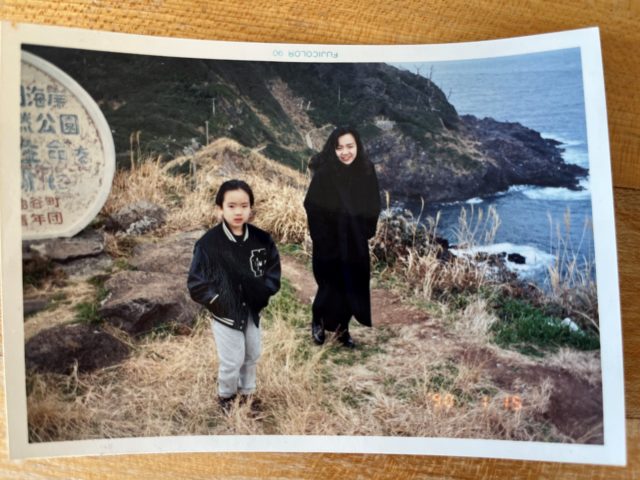
This came from a corner of my desk when I was cleaning up recently. It’s a letter I wrote to Isaku as part of a school requirement. I still like this letter, and I will keep it.
Spring 1998
Isaku
When you were still unborn, you were already someone I knew very well. I could feel you thinking inside my stomach, sucking on your thumb, looking at your tiny toes, jumping with surprise _ with me _ when something startling happened, like a dog barking out of the blue.
I hope I don’t embarrass you with this letter, which Brother John O’Donnell tells me you will have to read before your schoolmates. But I would like you to know that I love you very much. And nothing will change that, ever.
These days, I feel you are sometimes unsure about your future. That’s understandable. Like other Sophomores, you are still so young, yet important decisions are coming up on you fast.
Having two nationalities, two cultures and languages may seem a bit confusing, but it merely opens up more choices for you. You don’t have to close the doors of opportunity too hastily. You have plenty of time. Be strong and believe in yourself, although it is OK to be weak, and you are not alone. Many people, including your teachers and friends who care about you, are there to help you.
I hope you do your best in your studies and try to grow up to be a fine young man. The world is a beautiful place, but it is filled with many problems and needs young people like you to care and at least give it a good try to bring about a change for the better.
I thank God every day for making you part of my life. I thank God for keeping you safe.
It is only after becoming a mother and watching you gradually grow into adulthood that I finally know why God chose to come to us as a little boy who grew up among us. He knew that would make it so easy for us to love Him. It seems such a very simple and so obvious a fact, I don’t know why I didn’t think of it before.
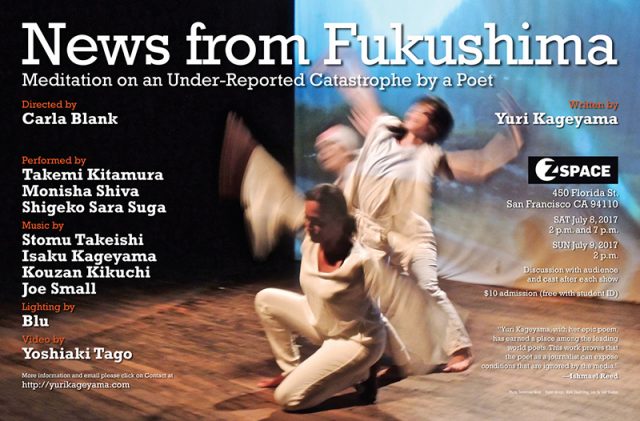
NEWS FROM FUKUSHIMA: Meditation On An Under-Reported Catastrophe By A Poet is an Official Selection. Screening at LetLive Theater in Los Angeles SAT March 2, 2024 7:30 p.m. I am happy, grateful, honored. Thanks to my theater and film directors, Carla Blank and Yoshiaki Tago, my brilliant tireless multicultural cast, my dedicated crew and team, everyone who stuck with and believed in my writing.
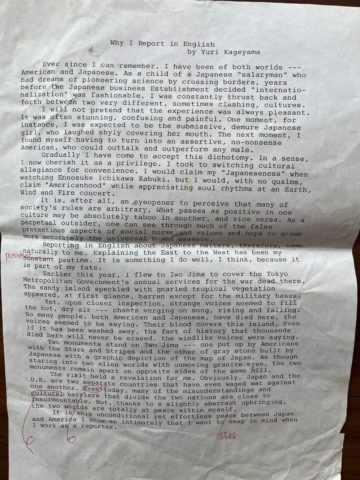
This is something I just happened to find in my desk, typed up (yes, typed _ remember those days?). It’s an essay about why I am a reporter, and why I report in the English language that I wrote I think in the 1980s. Perhaps I was applying for work? It is long before I joined The AP. I am not changing the wording, but have put it down exactly the way it is typed on the sheet of paper, except for the four changes made in red in pen that were already there. I might write it differently today. But I feel exactly the same. So here goes:
Ever since I can remember, I have been of both worlds _ American and Japanese. As a child of a Japanese “salaryman” who had dreams of pioneering science by crossing borders, years before the Japanese business Establishment decided “internationalization” was fashionable, I was constantly thrust back and forth between two very different, sometimes clashing, cultures.
I will not pretend that the experience was always pleasant. It was often stunning, confusing and painful. One moment, for instance, I was expected to be the submissive, demure Japanese girl, who laughed shyly covering her mouth. The next moment, I found myself having to turn into an assertive, no-nonsense American, who could outtalk and outperform any male.
Gradually I have come to accept this dichotomy. In a sense, I now cherish it as a privilege. I took to switching cultural allegiance for convenience. I would claim my “Japaneseness” when watching Ennosuke Ichikawa Kabuki, but I would, with no qualms, claim “Americanhood” while appreciating soul rhythms at an Earth, Wind and Fire concert.
It is, after all, an eyeopener to perceive that many of society’s rules are arbitrary. What passes as positive in one culture may be absolutely taboo in another, and vice versa. As a perpetual outsider, one can see through much of the false pretentious aspects of social norms and values and hope to grasp more accurately the universal human essence.
Reporting in English about Japanese matters, therefore, came naturally to me. Explaining the East to the West has been my persistent pastime. It is something I do well, I think, because it is part of my fate.
Earlier this year, I flew to Iwo Jima to cover the Tokyo Metropolitan Government’s annual services for the war dead there. The sandy island speckled with gnarled tropical vegetation appeared, at first glance, barren except for the military bases.
Yet, upon closer inspection, strange voices seemed to fill the hot, dry air _ chants verging on song, rising and falling. So many people, both American and Japanese, have died here, the voices seemed to be saying. Their blood covers this island. Even if it has been washed away, the fact of history that thousands died here will never be erased, the windlike voices were saying.
Two monuments stand on Iwo Jima _ the one put up by Americans with the Stars and Stripes and the other of gray stone built by Japanese with a graphic depiction of the map of Japan. As though staring into two alien worlds with unmoving granite eyes, the two monuments remain apart on opposite sides of the same hill.
The visit held a revelation for me. Obviously, Japan and the U.S. are two separate countries that have even waged war against one another. Today, many of the misunderstanding and barriers that divide the two nations are still close to insurmountable. But thanks to a slightly aberrant upbringing, the two worlds are totally at peace within myself.
It is this unconditional yet effortless peace between Japan and America I know so intimately that I want to keep in mind when I work as a reporter.
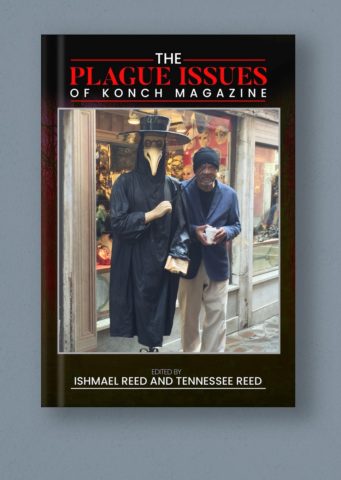
Ishmael and Tennessee Reed collected 62 contributions from people in China, Japan, Europe, Africa and the U.S. to write about their COVID experiences. And one of them is yours truly. The online collection of works crisscrossing the world and spanning two issues of KONCH literary magazine is coming out as a real-life book publication in 2024. On the cover is a photo taken in Venice of the poet, playwright, novelist, essayist, thinker and my forever mentor Ishmael Reed, standing next to a plague doctor (who else?) I am so happy, excited and honored. I can’t wait to get a copy.
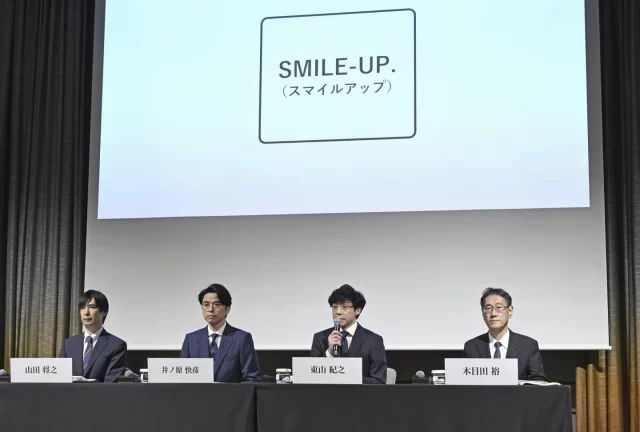
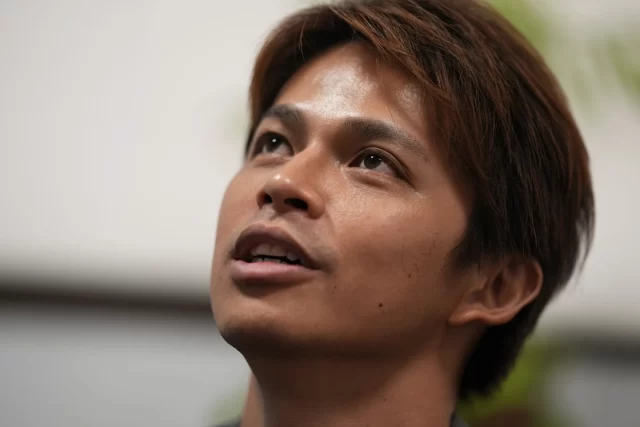
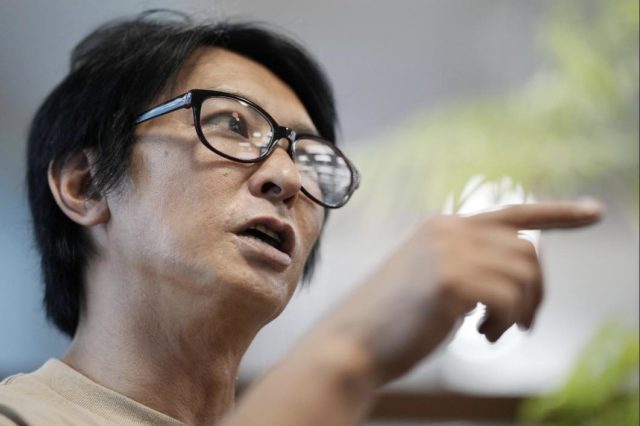
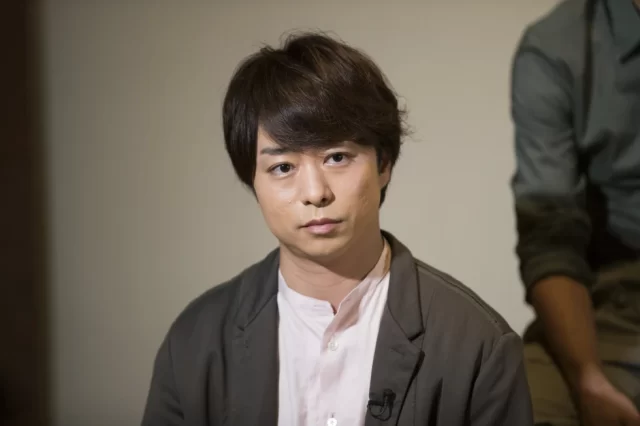
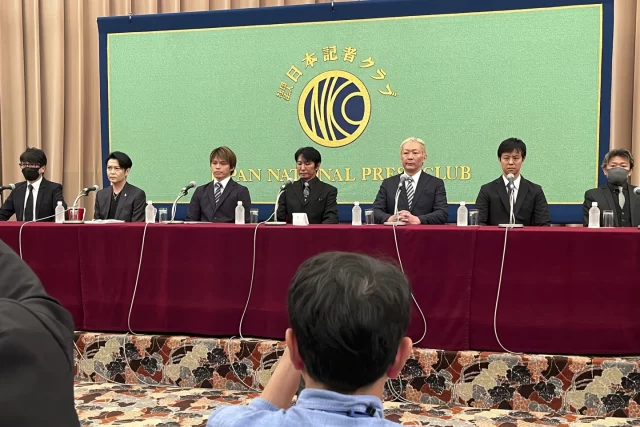
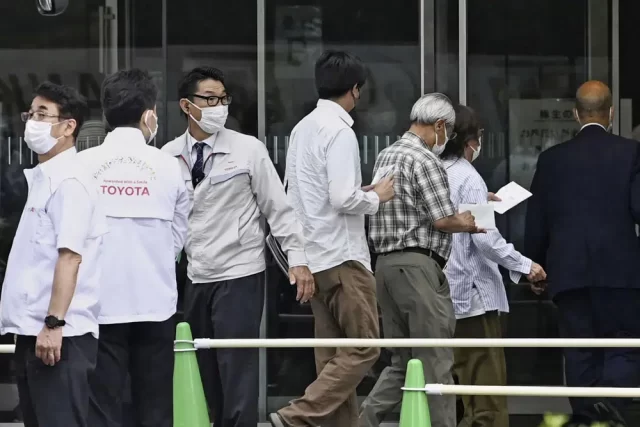
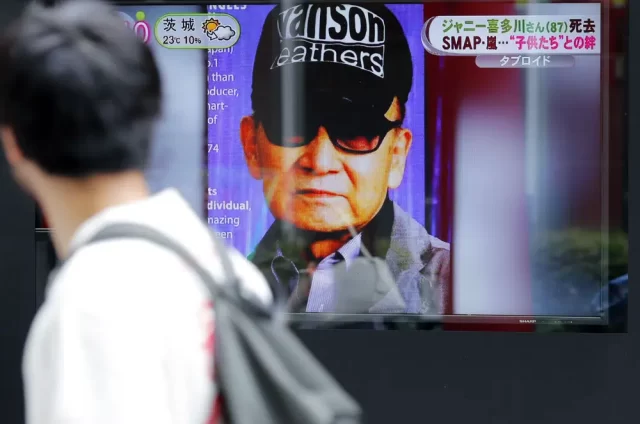
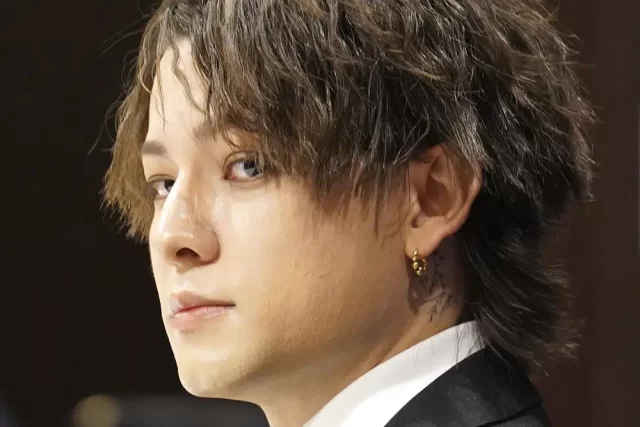
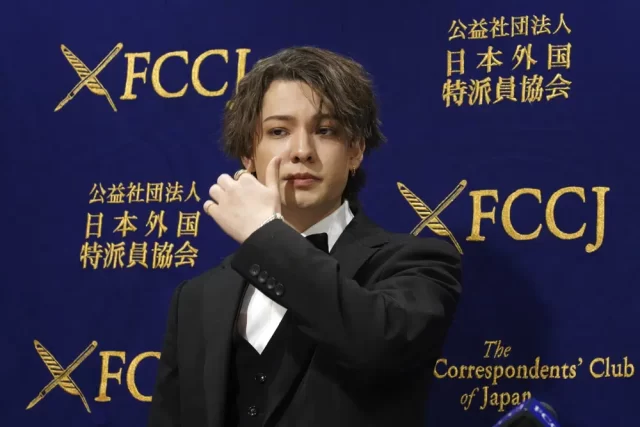
My AP Story Sept. 4, 2023 about how the men who have come forward are hopeful, and fearful, ahead of the company’s first news conference on the scandal.
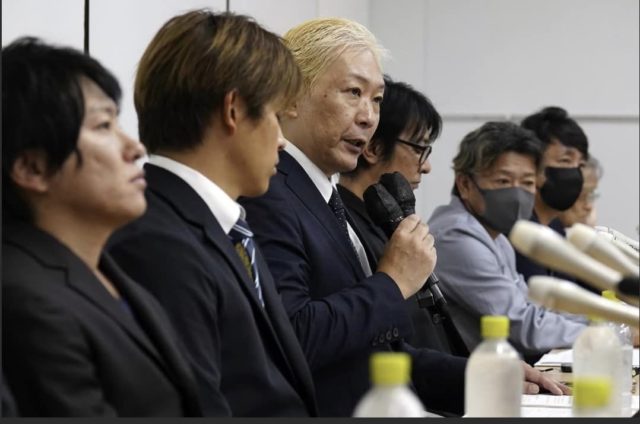
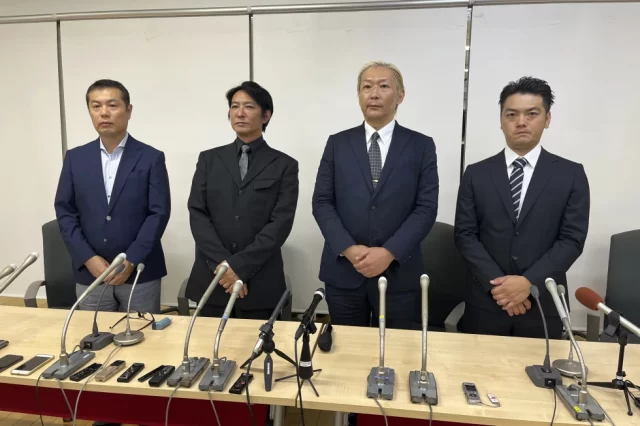
My AP Story Aug. 29, 2023 about a team looking into sexual assault allegations at Johnny’s and demanding Julie resign.
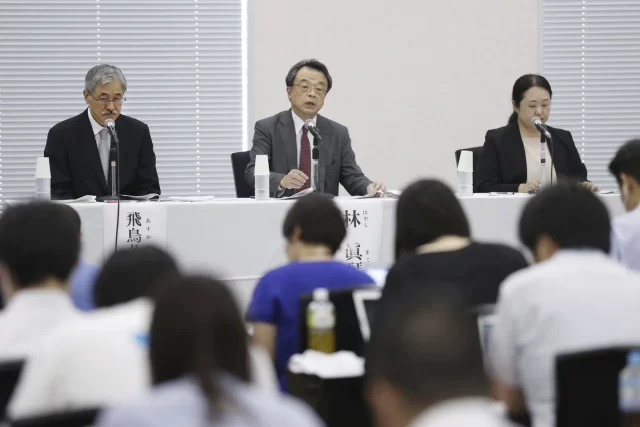
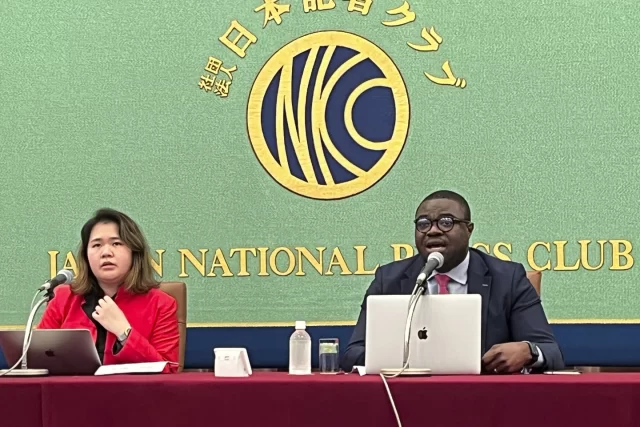
My AP Story and My AP Photos Aug. 4, 2023 about a U.N. group looking into the allegations at Johnny’s and how seven men saw that as a big step forward.
The ambulances are screaming. We look up and see a big tear in a steel fame right by our apartment building. We wonder but figure it’s not a murder because we don’t read about it, and there aren’t that many murders in Tokyo. Every time we see the broken frame, we wonder who it could have been. And what might have driven this individual, whom we don’t know and never will know, male or female, young or old, happy or unhappy, probably unhappy, literally over the ledge to a dark deep definitive leap of death. It does not make us feel very good. Every time we see that broken frame. A few weeks later, the frame gets fixed. And we stop wondering.
Featuring Tea on vocals and the YURICANE band with Hideyuki Asada (guitar, arrangement, audio mastering), Hiroshi Tokieda (bass) and Takuma Anzai (drums).
Photo by On Lim Wong.
I started working on this song in February 2019. It’s finally finished in 2023, as a recording, with singing and music. The piece is about how people like to talk about “what’s happening” or what’s going to happen. But most of the time, nothing happens. And nothing needs to happen. If anything, it can be a good thing when nothing happens. With the pandemic unfolding, the song became for me more pertinent than ever. I reworked the song to reflect that. In June 2020, I added the rap section in Japanese that refers to the death of George Floyd. We must not forget how precious those moments are when horrible things that can happen don’t happen, and we can just sit back and enjoy the passage of time, when utterly nothing happens.
Nothing happens なにもおこらない
_ a poem/song by Yuri Kageyama
(1)
Nothing happens
Bombs no longer falling
Nations aren’t
killing
Nothing happens
^___<
(2)
Nothing happens
Women aren’t
screaming
Children
aren’t starving
Nothing happens
^___<
(BRIDGE)
なにもおこらない
このきもち
なにもおこらない
しずけさ
^___<
(4)
Nothing happens
The stars will
shine
Behind clouds
that hide
Nothing
happens
^___<
(5)
Nothing happens
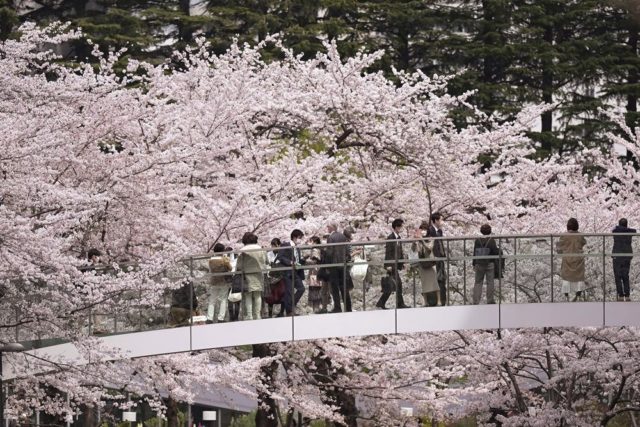
Birds, blossoms remind
The passing of
time
Nothing
happens
^___<
(rap section)
Nothing
happens
We took it for
granted
Nothing is
boring
Nobody up to
no good
Looking for something
Something to
happen
Before the
coronavirus
Now we wake
up to numbers
Pray the curve gets flattened
Pray it’s no
one we know
Waiting for
a vaccine
Scared by
the sirens
Italy, New
York, Spain, Wuhan, Tokyo
Now nothing
else happens
Nothing else
can happen
Now you know
it:
Now you wish
you didn’t wish it
Now you know
for sure you like it
When Nothing
happens
Yeah, Nothing happens
なにもおこらない
死ぬまえ
のこる生命で
えらんだ言葉
息ができない
彼のおもい
アメリカの差別
歴史のおもい
すべてすごくて
言葉がない
息ができない
息ができない
You know
that’s the view:
No news is
good news,
It’s so
quiet you can hear it
Silence is
the music
When NOTHING HAPPENS
^___<
なにもおこらない
このきもち
なにもおこらない
しずけさ
^__<
Nothing
happens
The Virus descends
Like a stranger
of death
Nothing
happens
^___<
Nothing happens
We can forget
the rest
How we miss
those days
When Nothing happens
^—–<
And this is how the song all started; the clip below is from while it’s in the works (Artwork by Munenori Tamagawa):