My Ikenobo Ikebana No. 15
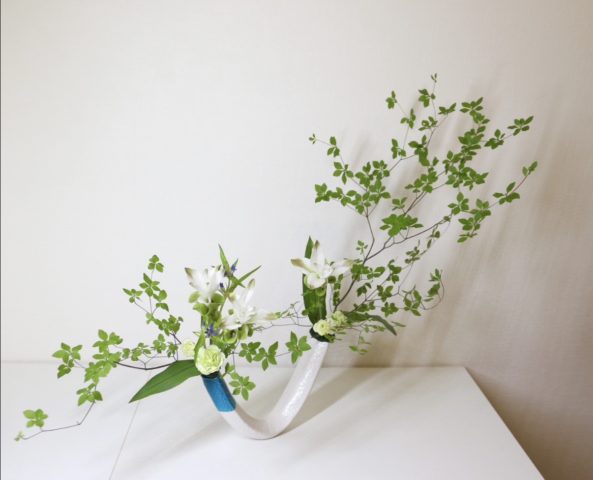
The Link to my previous Ikenobo Ikebana, where there are more links to go back to more Flowers.
My Ikenobo Ikebana No. 15
The Link to my previous Ikenobo Ikebana, where there are more links to go back to more Flowers.
My Ikenobo Ikebana No. 14
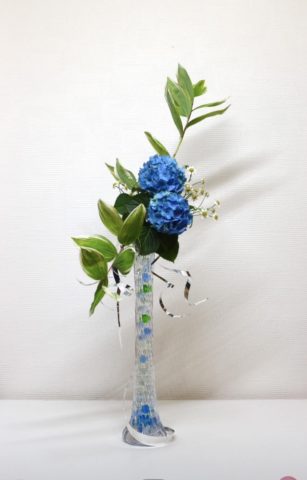
The link to No. 13, where there are more links to previous Ikebana. My Hydrangea Ikebana from a year ago. Feeling the passing of seasons is a key part of experiencing Ikebana.
My Ikenobo Ikebana No. 13
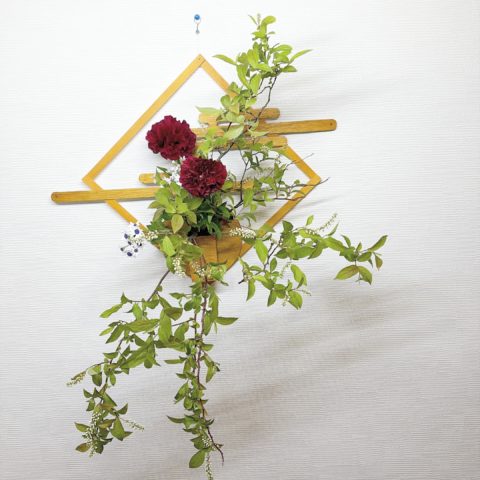
My teacher made this vase himself. The point of this ikebana is to have the elements cascade downward, and protrude forward, creating a flow of life in the leaves, stems and flowers that’s a statement, from top right to left downward, in a softly swinging angle.
Below is another, perhaps better, shot of the Ikebana, created May 13, 2026. And the link to My Ikenobo Ikebana No. 12 with a link to previous Ikebana that has more such links, all the way to My Ikenobo Ikebana No. 1 May 21, 2025. And so it’s been just about a year now.

My Ikenobo Ikebana No. 12
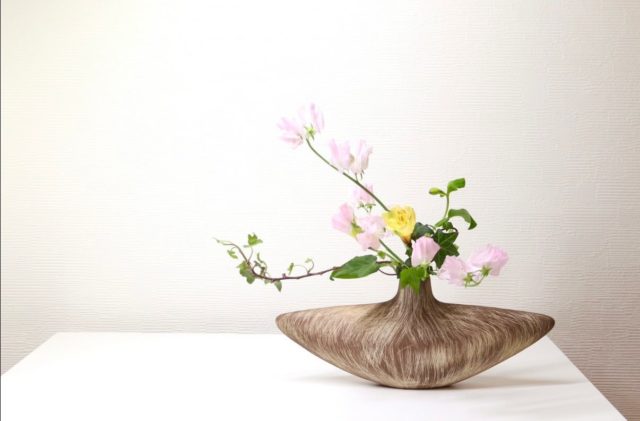
Today’s ikebana was fun because my teacher Mr. Okada, a man of many talents who can do backflips, allowed me to come up with own ideas. In the assignment, the yellow flowers were supposed to be the main elements, but I wanted to make the sweet peas the main elements, in the same way that the sidekick may steal the show from the lead actor. I also made the ivy into a circle. The link to my last ikebana with the link that leads to more previous ikebana links.
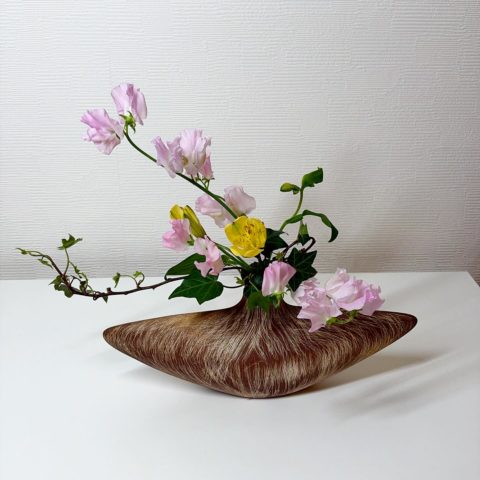
My Ikenobo Ikebana No. 11
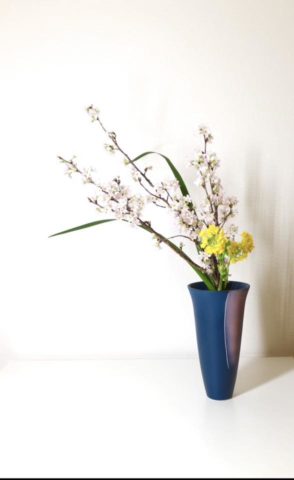
My Ikenobo Ikebana No. 10 with links to more, back to my very first attempt at No. 1.
I am always struck by how this art form requires you to think about what these flower elements might have looked like as they were growing in nature. As a result, all that you do to the flowers, including breaking the branches, bending the leaves and cutting off some of the flowers, is totally unnatural, which goes to show that is what people do all the time to nature. To make things looks right. Feel right. Be right for human existence. It is a cruel thing to do. But we do it all the time. And the saddest thing of all is that it does look right after you do it all. And it makes you feel better, and at peace.
My Ikenobo Ikebana No. 10
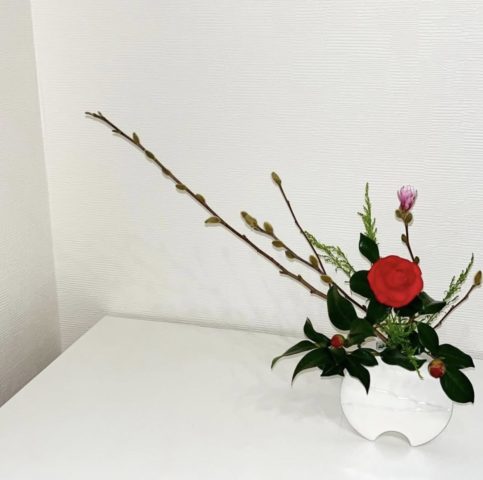
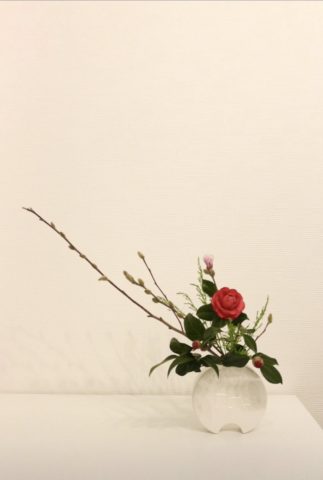
My Ikenobo Ikebana
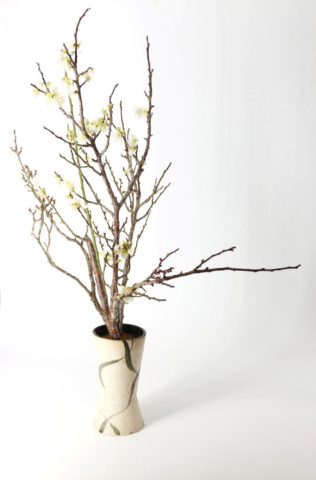
Today the teacher worked very hard to bring plum blossoms that evoke the coming of spring like the warbling of the uguisu Japanese nightingale, which is what he said I requested for my lesson last time we spoke. I probably really said that, although I don’t remember clearly about the uguisu. Anyway, what he helped me create today was truly worthy of that kind of whimsical dream.
My Ikenono Ikebana No. 8 and More Links to previous Ikebana.
My Ikenobo Ikebana


My previous ikebana with a link to more.


My Shoka Ikebana Nov. 5, 2025. My previous ikebana pieces here with links to even more previous ikebana.

This arrangement has the feel of autumn. The yellow chrysanthemums are the main objects. But the susuki grass blades add dynamism to the composition, while the brown-tinged leaves to the side have their own distinct personality.
My teacher said it was interesting I kept the blades long, and very much like me, which I think he meant in a positive way, as in a free spirit.
More of my ikebana at these links: No. 5 No. 4 No. 3 No. 2 and My No. 1 Ikenobo Ikebana.