HOKUBEI MAINICHI the Japanese American newspaper where it all began
Amazing to chance upon the digital archives of Hokubei Mainichi, a true community newspaper, as all journalism should be, and found stories I did, notices about my poetry readings, the birth announcement of our son and a column the editor then Howard Imazeki gave me to muse on motherhood. And today I see that he continued to publish my stories sent as AP reports from Japan. That made me cry. Thanks to journalism.
My longtime poet friend Alan Ota found this poem of mine from some time back. He thinks it is moving and might use it in his next book. I didn’t even remember having written this poem. It sounds like something I would write. I still like this poem.
My poetry an honorable mention in “The Terrible Fives”
This isn’t coming out until November 2026, but I am thrilled to get an honorable mention in “The Terrible Fives,” the upcoming book by Ishmael Reed, my longtime mentor since my Berkeley days.
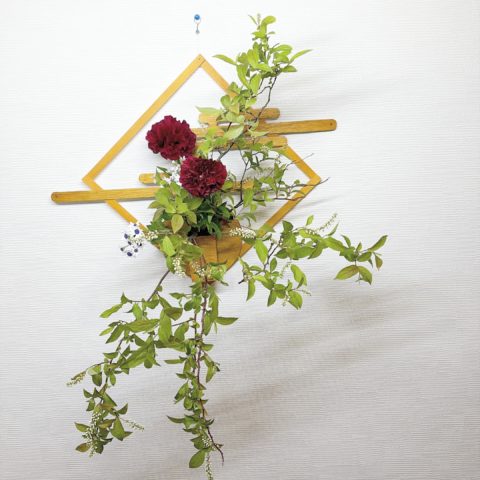
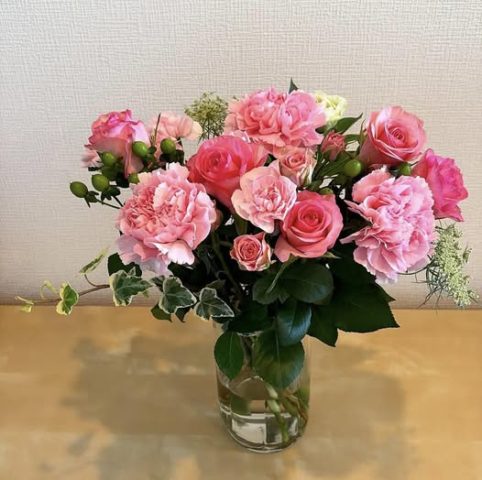
My teacher made this vase himself. The point of this ikebana is to have the elements cascade downward, and protrude forward, creating a flow of life in the leaves, stems and flowers that’s a statement, from top right to left downward, in a softly swinging angle.
Below is another, perhaps better, shot of the Ikebana, created May 13, 2026. And the link to My Ikenobo Ikebana No. 12 with a link to previous Ikebana that has more such links, all the way to My Ikenobo Ikebana No. 1 May 21, 2025. And so it’s been just about a year now.
at Senshin Obon in LA this year a very special lantern
IT IS OK a poem by Yuri Kageyama
it is OK
to idealize
he is now
an angel
or
at least that’s
what they say
he never laid eyes on another
he always brought home the pay check
he never broke anything
and he never snored
it is OK to believe
all those things
and think he was, will be
perfect
This piece came about as part of the Poetry Challenge, a group in Tokyo that shares work on a given theme. The theme was “Dreamtime.” I’m sharing it here because it turned out nicely, if I may say so, with the title “It Is OK.” Below is what our son Isaku did with the poem, using AI to make it into a song:
A song about love with Words written by Yuri Kageyama and Music and song by Ryu Miho
what do you think?
it’s a trick question
what do you think?
with a right answer
what do you think?
not at all open-ended
what do you think?
as it might seem
what do you think?
it’s asking do you really love me?
do you truly understand?
what do you think?
the answer isn’t fixed
just a right answer, and a wrong
what do you think?
i love you so much
what do you think?
and long after we’re all gone
what do you think?
that big question is still there
what do you think?
what do you think?
Lovers are always asking each other: “What do you think?” and getting upset if their lover doesn’t quite get it, or answers he or she felt something about an artwork or a film they just saw together in a different way from what you’re feeling, or thought the feeling should be, or whatever. It’s really a fruitless game, but it’s one all lovers play, all the time, throughout history, wherever they are, any nation, any culture. Because ultimately you’re just asking: Do you love me? And there is no right answer or a wrong one. Just that moment you share, you are both here, alive but together on this little beautiful planet, lost in the cosmos, and we never know what to think anyway.
And this version as arranged and performed by Toshiyuki Turner Tanahashi.
We presented “What Do You Think” at a Tokyo bar together May 3, 2026. A man came up and told us his wife always asks him that, too, and he never has the right answer so he’s given up. And so: What do you think?
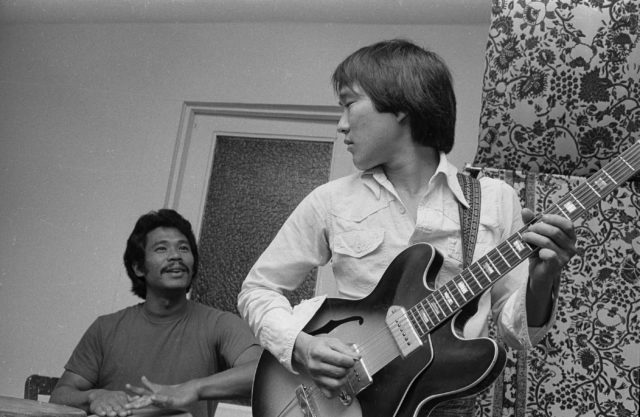
Gordy with Duke in San Francisco 1979. Photo by Bob Hsiang.
I now know it’s all the same thing, love and music. Or the poem, flower arrangement or any other pursuit. It’s about connecting with all that went before you, in all their trials and tribulations, everything. And love is a part of that, your connecting with that person you love. Maybe your friend, your mother, your partner for life. It might get complicated if you are trying to connect with the past, while at the same time trying to connect with that individual, who in turn may also be connecting with the musical or theatrical greats who went before him or her. But, hey, it’s all the same thing. It is how you live and how you choose to connect. And it is definitely a lifelong effort. Worth every second. Filling you with joy and meaning about having known those special connections, and that special person. So do not mourn. Just rejoice. Keep playing, writing, creating and loving.
The Poetry Challenge 2026 has now become a weekly. And so here goes. The first theme for the group is “Water.” More themes follow by the week below:
WATER
by Yuri Kageyama
You’re instructed to do less
Be invisible
Although no one is watching
You’re a threat just by being you
So be quiet and be still
Pretend you don’t exist
Don’t even breathe too hard
People can tell you can play
By just hearing a note
People can tell you can write
By just reading one line
And who needs that from you
When you aren’t even there
James McBride wrote “The Color of Water”
But you are neither white nor black
So you just aren’t there; OK?
And already totally forgotten
Midnight
by Yuri Kageyama
A sliver
Of a crack
Dividing
Tomorrow
From
Today
Slip through
A free fall
The other Side
Invisible
What Death
Feels like
Long lost lovers
Wait for you
That’s why
Midnight
Has that eerie feel
The moment
When eternity
Hits
A whisper
A breath
A nothing
BIRD SONG
by Yuri Kageyama
Plum blossoms warble
A flutter of green
Nightingales tell us spring is here
Gliding reflections
Elegance of white
Swans remind us of Tchaikovsky
Caught in a cage
Silent fluff of yellow
The Canary who’s forgotten to sing
SHAPE I’M IN
by Yuri Kageyama
Being not white
You get racism
Being a woman
You get sexism
You’d think with time
Race, gender maybe
Will matter less
Well well well
No no no
Being old
You get agism
And that’s together
With all you got before
LIES
by Yuri Kageyama
You are beautiful
People call them lies
I’m so in love with you
Those promises for forever
You are the only one
But some lies are allowed
In sickness or in health
They become truth in love
Till death doth us part
MISTAKE
by Yuri Kageyama
Waiting for Godot
Ice cream
Rock ‘n’ roll
A good night’s sleep
Waking up after that
Soft sunlight through the window
Michelangelo
A joke that makes everyone laugh
Pink lipstick
Pink roses
Pink bubble gum
A gorgeous sunset
Winning but knowing it’s OK to lose
Losing but knowing you might win next
Landing a job
Getting paid
Going out to dinner
Going out dancing
Burritos
Birthdays
The smell of evergreen
A fireplace
A walk on the beach
Holding hands
The John Coltrane Quartet
Jimi Hendrix
This is a list of things I love
Have loved
Will love forever
Remember
No mistake
Our baby’s first cry
Our baby now a man
Pride and joy
Peace on earth
The caress of your kiss
DREAMTIME
by Yuri Kageyama
it is OK
to idealize
he is now
an angel
or
at least that’s
what they say
he never laid eyes on another
he always brought home the pay check
he never broke anything
and he never snored
it is OK to believe
all those things
and think he was, will be
perfect
a link to the poem as a song below, courtesy Isaku (I changed the second-to-the-last line to match the musical version _ and because I like the new line better):
Walk On
by Yuri Kageyama
Dionne Warwick sang “walk on by”
About someone who said goodbye
Paul Griffin plays piano on that track
Do you remember or care to look back?
He recorded with hundreds of musicians
Bob Dylan, the Isley Brothers, Van Morrison
We must keep going and walk on
Not passing and forgetting, walk on
Dark Side
by Yuri Kageyama
Smart people say
William Blake believed
Good and evil are
Side by side
But I heard different
Like a child
Pure and clear
That voice:
“Mommy I love you”
Heart and mind and flesh
For all eternity
That is
Good
The side
To know and stay
Blessed are we all
For those memories of good
Even those we no longer
Really remember
But I know
For sure
We do
Get
To
Choose
To live by good
And die by good
And not walk over
To the dark side
Which is somewhere else
And we don’t have to be all that smart
To be different
From that other side,
Twisted and gnarled
Hateful of others’ joys,
Just hissing and snarling
First Contact
by Yuri Kageyama
You sent me pink flowers
It’s been a year since he died
A whole year
“Sending big hugs your way”
You wrote in a message
I hear a happier voice
Than some time ago
When you said
“I can’t give you grandchildren”
Though I replied quickly, firmly
“You don’t have to give me grandchildren”
I will try to remember that happier voice
Like when we went to hear Jharis Yokley
Rhythms resonate in a tiny Tokyo hall
It doesn’t matter
We can’t remember what we said
The first time we met
WEARY
by Yuri Kageyama
I’m never tired of remembering you
When I vacuum and pick up your sheet music
When the silly things you saved fall off the shelves
When my heart aches each day you aren’t here
I’ll never tire of loving you
Even if you aren’t here to hug or cuddle
We have memories like when our son was born
How we took turns till he happily dozed off to sleep
I just know you are still here
Watching to make sure I don’t fall or cry too much